Showing posts with label Nature. Show all posts

November 13, 2025

Intentionally Delaying Gratification - Shooting Flm Defies Digital Immediacy


Imagine taking pictures and not seeing them for two months. Really. Think about that.

I started this roll of film towards the end of August, shot the last frames in early October, and received the processed film and scans towards the end of October.

Pre-Sunrise

Compounding the anticipation was shooting with a cheap Holga film camera. The plastic lens and minimal setting controls make for uncertainty as to whether the images will even come out!

While the intentional sideways camera movement with a slow shutter created the pleasing scene above, unwanted blur with other frames rendered them unusable

Sunrise
I love the way the distortion and flare of the plastic lens creates an iris-like effect.

When snapping the shutter last August, I had no idea that my lo-fi gear would capture this magnificence.

Definitely worth the wait.

April 27, 2025

The Pictures Not Shown

Speaking on the phone with a friend while driving to walk on Duxbury Beach I explained that despite the semester's end nearing, I had yet to tell students of my imminent retirement.

"I don't know how to tell them," I exclaimed. 

"Make a sculpture that expresses your feelings and see if they can figure what you are trying to say."

His suggestion got me thinking. Since I had my camera with me, I wrote down a list of the feelings I wanted to express and the endeavored to create visual expressions of the ideas.

Let me know how I did.

I photographed at Duxbury Beach, in The North Hill Marsh Wildlife Sanctuary behind Duxbury's Town Hall and at The Old North Bridge in Concord, MA 
 
It proved a healthy challenge to visual portray the concepts. I reflected that I always assigned my students this very task, to visually communicate ideas without words. It's hard!

While the process became a therapeutic method to grapple with the sadness of the ending and the excitement of a beginning, I ultimately decided that I would not show the images to my students.

1. I was concerned that if they did not figure out what I was trying to say it would be embarrassing for all of us.

2. More importantly, after students presented their final projects, I did not want to make the last moments of class all about me.

My friend Benjamin Swett recently published a book of his essays and photographs: The Picture Not Taken.

I am in the opposite position.


John Nordell is a photographer, educator and curator. He blogs about the creative process at johnnordell.com Instagram: @john.nordell

November 9, 2024

A Day at the Beach

The heat of the semester often leaves scant time for my own artistic pursuits. However, this holiday weekend opened up a free day for me. I started off at The Coastal Center at Milford Point, a Connecticut Audubon Society bird sanctuary, and finished a few miles down the road at Silver Sands State Park. My students and the content I teach were with me, inspiring and pushing my explorations. Aside from the horseshoe crab shot, the other images were digital in-camera multiple exposures, as I overlaid 2, 4, 6, 8 or 9 exposures into a single file.

Sea and Sky - After Mondrian
Ocean Aperture
A digital evocation of the Kodak Projection Print Scale I used years ago in my darkroom.
Older Than Dinosaurs (Deceased Horseshoe Crab)
Ocean Cosmos
Boardwalk and Park Place!
Do you see rabbits or rocks?

Professor John Nordell teaches courses in the Arts, Media, and Design Program at American International College in Springfield, Mass. He blogs about the creative process at CreateLookEnjoy.com. Instagram: create.look.enjoy

June 28, 2024

Toads, Arks and Rocks

It's hot and humid. I'm hiking uphill getting close to large rocks left by glaciers when suddenly noticing this toad prompts a reflex of surprised levitation. Feet back on earth, I crouch down, zoom in, and snap away.

Guardian - An American Toad

I'm on a Trustees of Reservations property in Manchester-by-the-Sea, recently renamed The Monoliths, a change from Agassiz Rock. According to the Trustees, "There is no doubt that Agassiz’s theories about the rocks dotting New England’s landscape being shaped and deposited by glaciers and not the biblical flood that floated Noah’s Ark, as believed at the time, were groundbreaking. However, Agassiz also vehemently promoted the theory of polygenism—the view that humans of varying skin color are of different origins and non-white races are inherently inferior—to a degree that was considered extreme even for his time."  Click for their full explanation for the name change.

How Long
 Has This Been Going On?

I'm shooting Little Rock with a contemporary Nikon Mirrorless Z6 II DSLR camera, using my 50-year-old 50mm f1.4 Nikkor lens acquired as a teenager.  

Positively Pyramidal

Using a technique to create experimental images I learned when teaching at Hallmark Institute of Photography, I removed the lens from the camera and held it an angle a slight distance from the camera's sensor. 

Balance

When not experimenting, my vintage lens renders super sharp images.

Same Scene Seen Differently

Like my unexpected toad spotting, I love the surprises that emerge when using equipment in a fashion it was not designed for. Perhaps the dreaminess captures the location's mythical aspects.

Life from Rock

The very large (f1.4) maximum aperture of the lens allows me to isolate subjects using shallow depth of field.

Big Rock

Down the hill from Little Rock near a swamp is the 30-foot-tall Big Rock. Nestled in trees, it was hard to photographically capture the majesty of the edifice. The process became even more challenging as a swarm of mosquitos attacked me and sweat streamed down my face.

Fern Fractal

Despite not being satisfied with my photos of Big Rock, the adverse conditions caused me to surrender and retreat back to my car.

Rock my World
On my way out, the markings on this rock evoked the toad that welcomed me to the property.

Back to top and toad.

Professor John Nordell teaches courses in the Arts, Media, and Design Program at American International College in Springfield, Mass. He blogs about the creative process at CreateLookEnjoy.com. Instagram: create.look.enjoy

September 3, 2023

From Roxbury to Revere - Shooting Film and Living in History: How My Image Selected for the 2023 Somerville Toy Camera Festival Came to Be

So excited that Fly Like a Tern, my image shot with a lo-fi plastic toy camera called a Holga, was selected for exhibition in the 10th Annual Somerville Toy Camera Festival. Culled from a pool of 500 submitted images, show juror Ann Jastrab chose 89 photos by 64 artists, who represent 18 US states, The Netherlands, and England. The work will be on display in three galleries across Somerville, MA from 9/7/23 to 10/7/23.

9/10/23 at 3pm marks the opening reception at The Nave Gallery where my image will be on view. Details for all the galleries here.

Fly Like a Tern

The Festival call for entries describes the toy camera aesthetic:  "Celebrate the flaws, the quirks, the accidental genius that lousy lenses can create! Images of any subject matter, made with a “toy” camera (or any low-tech camera with no or very limited exposure control, such as pinhole, Holga, Diana/Diana clones, Brownie, Ansco, disposable cameras) are eligible.  Key criteria are plastic lenses and lack of reliable exposure control."

My Holga 120 film camera, purchased used for 10 dollars and held together with tape.

With my college students, I constantly infuse teaching the creative process.  Here is the story that led to me capturing Fly Like a Tern.

One evening, while playing drums in my basement, I took breaks and randomly pulled books off of shelves. I am blessed with a bounty of art-related books, many bequeathed to me by my art loving and art collecting parents. One title was Route 22,  with photos and text by my friend Benjamin Swett.  The book includes his contemporary photographs of buildings paired with historical images of the same structures.  Another chanced upon tome was Drawn to Art, shown below. While I have not read much of this 1985 book, the images of historical buildings and scenes prompted me search out the contemporary locations.  I bet that stumbling across Route 22 inspired this approach.

Drawn to Art - A Nineteenth-Century American Dream by Diana Korzenik
Blackboard 1877 by Winslow Home
r

From the front flap:  "In this moving narrative, Diana Korzenik tells how a group of largely rural, working-class people, both men and women, aspired to become artists in nineteenth-century America. The author uses her discovery of a rich collection of documents, including letters, journals, sketchbooks, and artwork, to give a unique human dimension to the educational developments of that time. The three children of the Cross family of New Hampshire, all of whom became professional artists and engravers, just happened to be touched by leading educators, printmakers, and publishers at the critical moment when America was learning to draw with a fervor akin to today's movement toward computer literacy. Like many others, they experienced the illusion of promise which the art of drawing held out to students and also the sense of disappointment when almost overnight their skills became obsolete as technology changed."


A 2022 view of the Prang Printing Company building shown in 1867.
At left are educational American Drawing Cards printed by the Prang Company.
Prang also printed chromolithographed art reproductions,
revolutionizing the distribution of art to the masses. 
Location is Roxbury, a section of Boston, MA

l’m taking the above picture with my iPhone and a woman in the third-floor window of a building across from Prang, asked me if there’s a picture of the building in the book I am holding.  I say, "Yes, they used to do color printing there."  She says, "Oh yeah they used to do printing in this building.  The neighborhood is really interesting.  The old church up the street, Paul Revere rode his horse down here, and they built a mosque over there."  I pointed Roxbury Community College and say, "This is new."  And she says, "Yeah that’s all new since I’ve been here.  I've been here 20 years."

The Prang building at right. You can see the "P" at top right.
In the background is the minaret from the 
Islamic Society of Boston Cultural Center's mosque.
Shot with my Holga. 
And then I see a Muslim woman covered head to toe. I’m trying to get a shot of her silhouetted against the Prang building. She moves off to the side.  And I realize she’s trying to get out of my picture.  All I could see were her eyes; they were heavily made up and expressive. Her clothes are all black, save for a stitched pattern along the sleeves. She has a large phone in one hand and a water bottle on the other. She was apologetic about getting in my picture.

I asked her if I can take her picture, and she says OK, and I’m just trying to get the settings right, trying to pose her, trying to get the framing and a man comes out of a restaurant.  They talk and then she says she doesn’t want her picture taken anymore. She says that she doesn't like being on the news and I say it won’t be on the news, just on my website, and she says no, she won’t do it. She doesn’t want to be out there. She said people will see her on the website and call her. I asked if we could just do something without showing her face, and I realize she’s uncomfortable, so I say don’t worry, don’t worry, and she says sorry, sorry, and I know there’s several people on the street watching and looking out for her.
 
Quadruple exposure of the Prang building taken with my Holga.

Normally while shooting film photography you want to avoid double or multiple exposures.  The design of the Holga is missing a safety stop thereby allowing one to easily take unintentional multiple exposures, or, as in the case above, easily take intentional multiple exposures.

My series of intentional multiple exposures taken with a digital camera is called Reality-Based Abstraction.

I recently experimented with a mirrorless digital camera: Deconstructing Digital Precision and Predictability to Achieve Analog Uncertainty and Variability.

"Future is Our Focus" states the upper left banner for Roxbury Community College.  You can see downtown Boston to the left of the minaret.  The red brick building at right is once again the Prang Building. Panorama shot with iPhone. Click image to enlarge.

On my way to the next location featured in the book, I stopped by the studio of friend and mentor, photographer Lou Jones.  I lamented "the one that got away" as I recounted just missing a photo of the Muslim woman.  After briefly commiserating with me, Lou explained the in and outs of photographing women at a mosque, noting the layers of cultural norms he had to navigate to capture the assigned imagery.  

Speaking of "the one that got away," I once photographed a fisherman with my Holga and we realized there are many connections between photography and fishing.  Read more about this.

Aiming to find the location of this beach shanty where one of artists featured in Drawn to Art lived, I plugged Point of Pines into Waze and up popped the Point of Pines Yacht Club.  The caption states the location as Point of Pines, Revere, MA. Probably mid 1870s.  iPhone image.

The front door of the yacht club was locked.  I walked around the side and found some workers on the pier waiting for access through a locked gate to work on a boat.  One of them saw me struggling in the strong wind trying to hold the book while taking a picture with Point of Pines in the background.  He volunteered to hold the book for me.

"The Pines Historian," self-proclaimed. 
Looking East towards the point. Shot with my Holga.
I am out on the beach about where I think the beach shanty was located and meet Chris and his dog. He said he lives in his grandmother's house, at Point of Pines. He says he collects any kind of maps he can find, but didn’t have anything as old as the drawing I had in the book.  I wondered if the shack had been right on the point, and he said a thing like that wouldn’t last long in a storm. I asked if those are the "pines" over there, as I saw a few pine trees, and he kind of laughed said something like, what’s left of them." We traded phone numbers.  As a parting comment, Chris quipped, "I'm the 'Pines' historian – self-proclaimed!"
 
Chris texted me some images from his historical collection.  He thinks we met just beyond the boat houses at top left.  Looking North toward the point.
Looking East towards the point.  Perhaps the location of the beach shanty.
 Panorama shot with iPhone. Click image to enlarge. 
"The Coney Island of The East" Another gem image from Chris's collection. 1890s.
We met at the point at the far right.  Looking West.

After Chris texted me these amazing images, I replied, "Thanks again Chris! Maybe you are more than self-proclaimed!  He replied, "Still self proclaimed. Just nice for someone to appreciate it."

Connecting to Spirit. Shot with my Holga.

After saying goodbye to Chris, I walk down the beach back to my car.  It is blustery with a hint of thunderstorm in the air.  I feel fully present in the moment, exhilaration coursing through my body.  

Fly Like a Tern

A few feet from me terns are diving into the ocean to catch fish.  I catch one of the terns flying in the sky with my Holga.  This image is later accepted for the 2023 Somerville Toy Camera Festival.

***************************************************************************

In the 80s and 90s, I shot film as a professional photographer.  These days, working as a professor, I shoot film to explore the intersection of art and technological change.  Thanks to The Darkroom for their excellent processing and scanning of my film.

Part 1: Shooting Film After All These Years - Process

Part 2: Shooting Film After All These Years - Pick Hits

Go back to top of blog.

Professor John Nordell teaches courses in the Arts, Media, and Design Program at American International College in Springfield, Mass. He blogs about the creative process at CreateLookEnjoy.com and teaches online Zentangle drawing workshops.  


May 9, 2023

Deconstructing Digital Precision and Predictability to Achieve Analog Uncertainty and Variability

Early in my post-photojournalist teaching career, Douglas Dubler came to speak at Hallmark Institute of Photography.  Contrary to conventional wisdom, Dubler explained how he liked to sometimes overexpose digital images.  I gasped. 
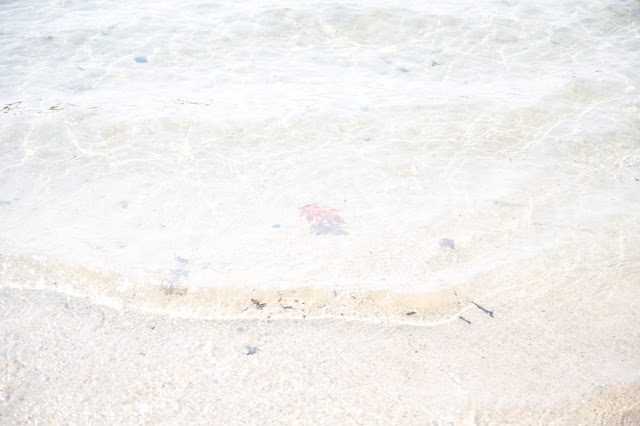
Lunar Pond

Fast forward some 15 years.  I am at Walden Pond in Concord, MA, photographing with a Nikon Mirrorless Z6 II. When shooting in manual mode, I can see a real time preview of my exposures. I thought of Dubler's explorations and intentionally overexposed this image.
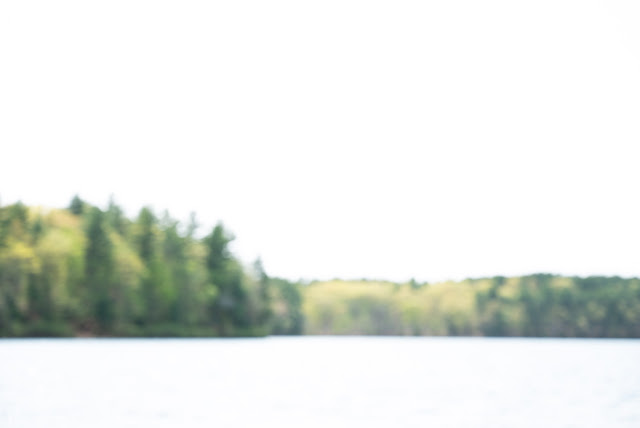
Essence of Woods, Fragility of Water and Sky

Along with intentionally overexposing the images, I deliberately shot images out of focus in order to abstract the forms into their essences.

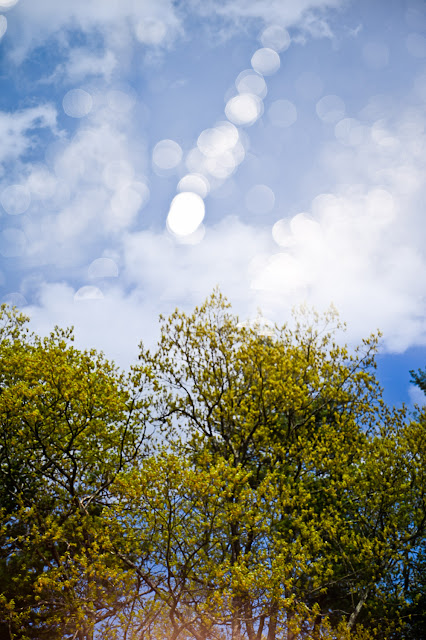
I found these out of focus sun sparkles captivating:

However, the dark background of the sandy pond bottom detracted from the effect I was hoping for.
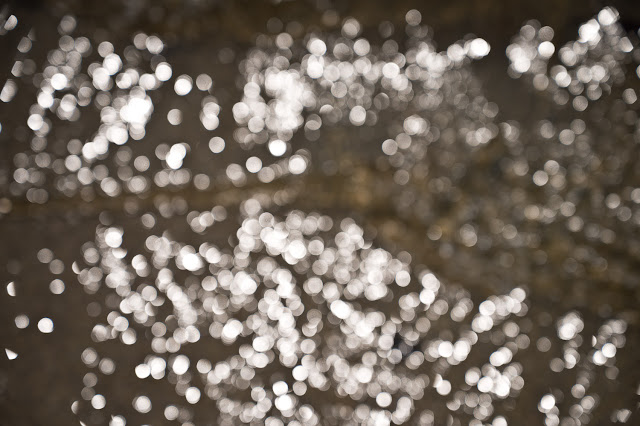
Going With the Flow

Striving to highlight the highlights, I shot an in-camera double exposure, combining the sun sparkles with a photo of trees, clouds and sky:
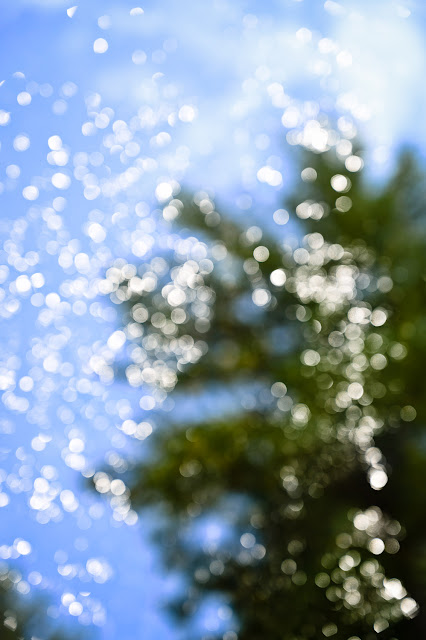
Sunny Skies

Hmm.  I liked this, but wanted to isolate the sparkles and avoid an edge-to-edge overlapping of images.

So, I held my hand in front of the lens to block off half the frame:
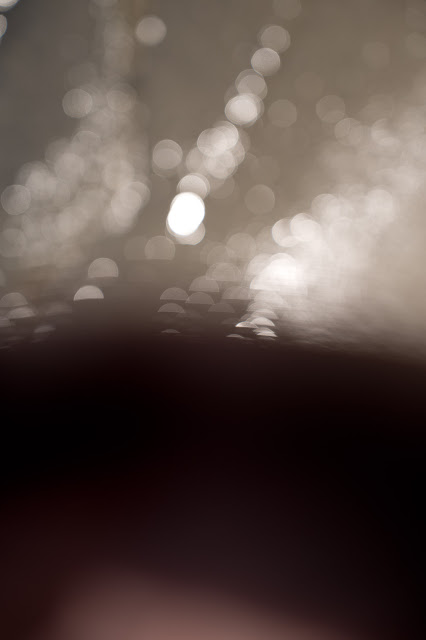
Masking by Hand

Another in-camera double exposure that overlaid the above image with one of trees and sky led to a subtle layering of images and the realization of my vision.  (I have written previously about that when shooting multiple exposures with the Z6, the camera combines the images, yet also retains each individual image file.)
From Precision to Uncertainty

For me, the muted and naturalistic colors of the image have the look of a double exposure created with a film camera. The orange glow at the bottom evokes a light leak.

Analog film experimenter and explorer, Beth "I shoot film" Machiorwoski, who sometimes runs a roll of undeveloped film through the dishwasher before processing it, taught me to find beauty and joy in the vicissitudes and vagaries of film photography.

I am always excited to deconstruct digital precision and predictability to achieve analog uncertainty and variability.  Thank you Beth and Douglas for guiding me on this journey!

Professor John Nordell teaches courses in the Visual and Digital Arts Program that he created at American International College in Springfield, Mass. He blogs about the creative process at CreateLookEnjoy.com and teaches online Zentangle drawing workshops.  

December 13, 2022

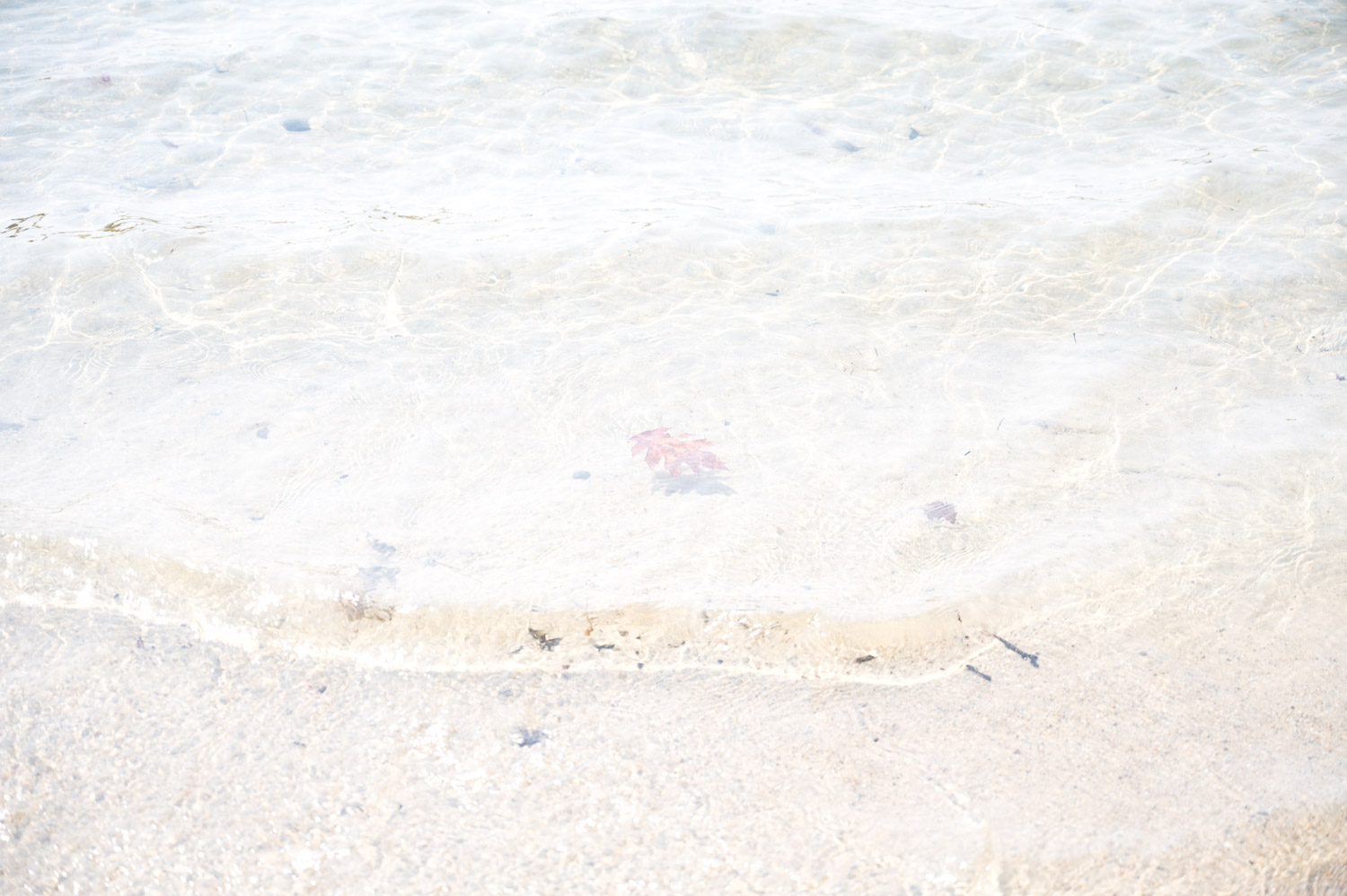
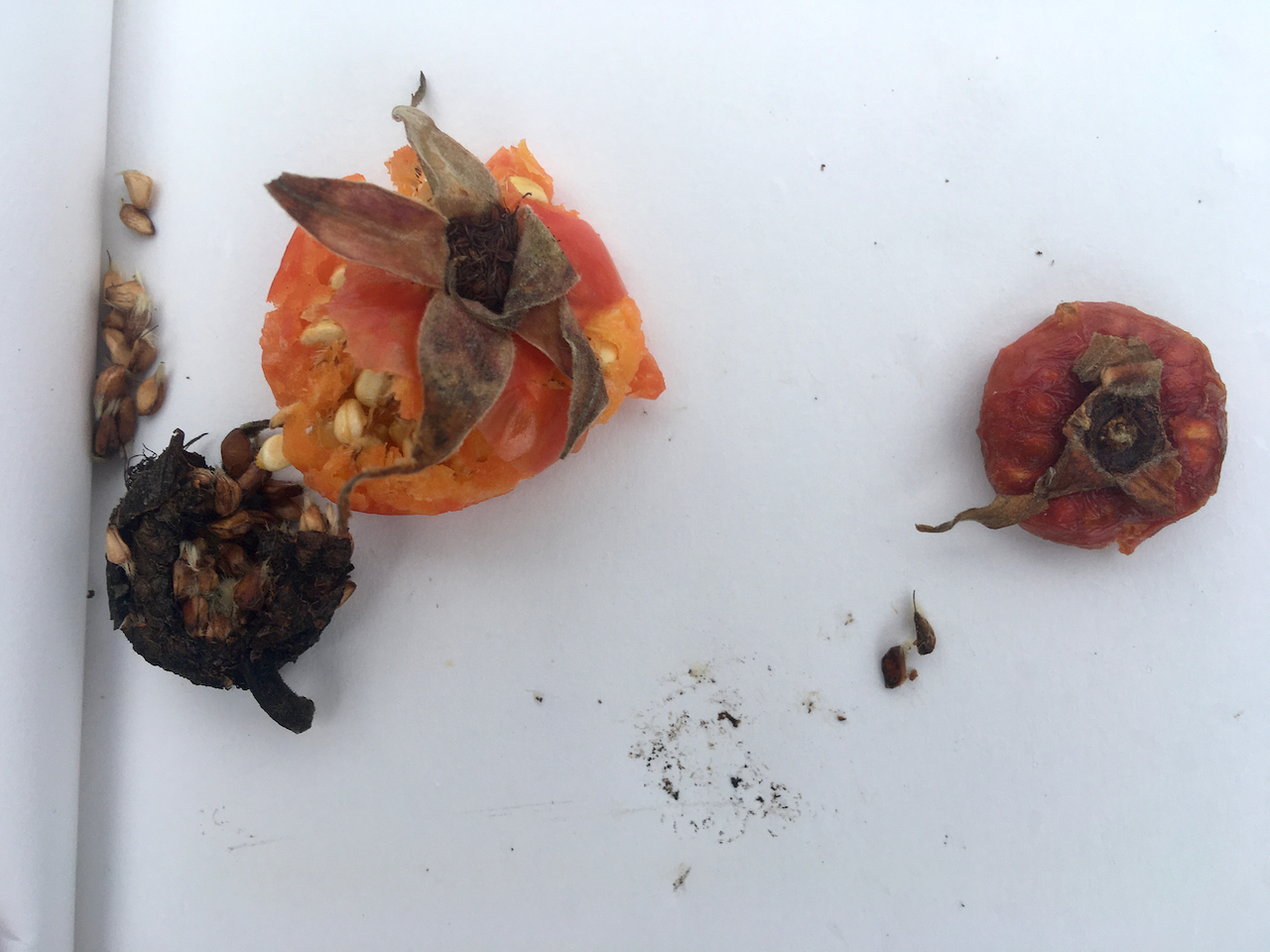
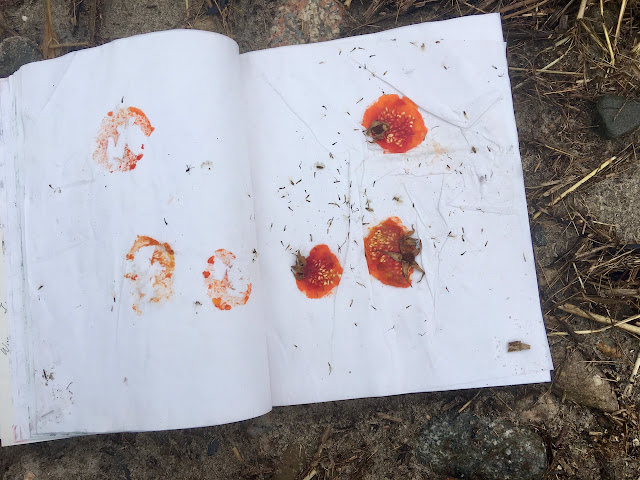
Eschewing Conventional Art Tools: Block Printing Beach Plums Using Ocean Water Lands Me In the Present Moment

On a blustery day after Thanksgiving,  I wanted to make art in my sketchbook using only found materials at Duxbury (MA) beach.  I like the challenge of eschewing conventional art tools such as paints, inks, pencils, pens, glue and so on.  And I love the physicality of creating outdoors. The crashing waves of the incoming tide, the raindrops falling on my head, the irregular grittiness of natural objects, the taste of salt on the wind and the varied magnificent vistas all brought me into the present moment of encountering life itself.


Collecting Beach Plums in Varying Stages of Decay

Learning That Moisture is Key When Block Printing Beach Plums

Moistening Sketchbook Pages Before Printing Again

Finding Soft and Ripe Beach Plums

A 180 Pound Printing Press

Cover Art

Evoking a 19th Century Japanese Persimmon Painting

Reveling in the Sensory Moment

Buying a Frame at The Salvation Army

Framing Memories
 
Professor John Nordell teaches courses in the Visual and Digital Arts Program that he created at American International College in Springfield, Mass. He blogs about the creative process at CreateLookEnjoy.com and teaches online Zentangle drawing workshops.