Showing posts with label Books. Show all posts

December 4, 2024

Abstraction Born from Elemental Shapes and Forms: Imprints of a Circuit Board

I love learning. And experimenting with art tools. Perhaps playing is a better term. Found inspiration in a book bequeathed to me by my art loving and collecting parents: Abstract Art by Gerhard Gollwitzer


Abstract Art by Gerhard Gollwitzer
Spheres - Same Shape, Different Sizes

Cylinders - Same Shape, Different Forms
Squeeze in the Sides of a Sphere to Make a Cube
Circuit Board Imprinted on a Flat Piece of Clay Rolled into a Cylinder
Circuit Board - Making Good Use of an Obsolete Computer's Innards
Circuit Board Imprinted on a Flat Piece of Clay 
Crayola Clay - Stale Yet Charming

Professor John Nordell teaches courses in the Arts, Media, and Design Program at American International College in Springfield, Mass. He blogs about the creative process at CreateLookEnjoy.com. Instagram: create.look.enjoy

March 6, 2022

On Emojis and Jin Shin Jyutsu: Seeing With the Hands of Prayer

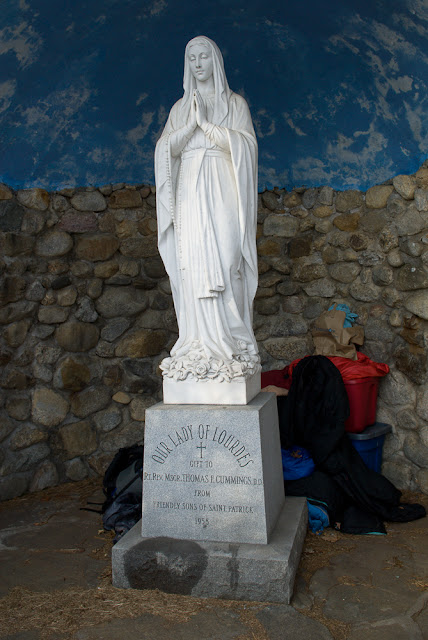
A slash of sun glanced off Our Lady of Lourdes in Northampton, Mass.

Grotto

As I got closer, a person's belongings became visible.  At first I wondered if the owner was present.

Refuge

Friend and creative spirit Melly Mel liberally uses emojis in ingenious ways.  The gratitude he often expresses inspired me to focus just on her hands.

Namaste

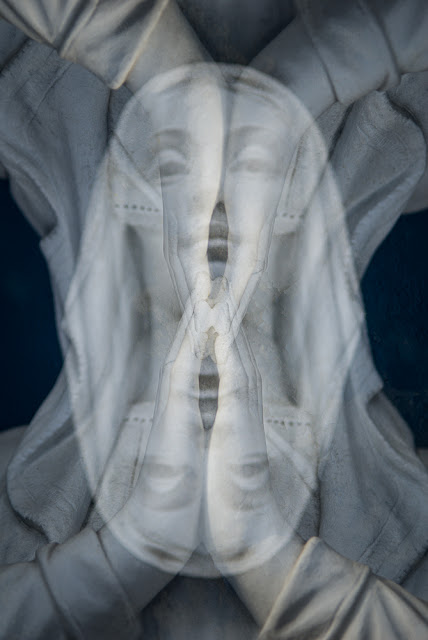
I then shot an in-camera multiple exposure, layering images.

Seeing With the Hands of Prayer

In the healing system of Jin Shin Jyutsu, likened by some to acupuncture without needles, placing fingers at specific different places on the body can balance energy, thereby unifying a person with the universe and generating health.  Pressing your thumb into the palm of your other hand is one recommended technique. According to The Touch of Healing, a book about Jin Shin Jyutsu, this approach is akin to joining hands in prayer.  

"The ancients knew that this was no mere symbolic gesture but a practical, hands-on way of achieving harmony with the universe."

The next time I use the prayer hands emoji to communicate gratitude or thanks, I will strike the pose as well.

John Nordell teaches courses in the Visual and Digital Arts Program that he created at American International College in Springfield, Mass. He blogs about the creative process at CreateLookEnjoy.com   Instagram: @john.nordell

April 19, 2020

X-Ray Mirrors: Visible Unseen Identities in Photographs


As a college professor, I have been scrambling to generate projects that my photography students can complete at home. The photomontage below is my test run of a Windows and Mirrors assignment, inspired by an excerpt from Sytze Steenstra’s book Song and Circumstance, about the work of artist and musician David Byrne, of Talking Heads fame.

According to an already classical distinction, proposed by John Szarkowsky, leader of the Department of Photography of New York’s Museum of Modern Art, photography can be approached “as a means of self-expression (as a mirror),” and “as a method of exploration (as a window).” Bryne freely combines both approaches, and casually erases the distinction:

Inside Looking Out and Outside Looking In
"Windows are mirrors through which we see ourselves reflected. Our view is colored by our prejudices, history and class.  We see reflected our perceptions of the landscape, the skyline, the people on the street, the weather, and what they mean to us.  Photographs are also mirrors.  In them we see reflected our own internal biases, our own assumptions, our own presuppositions. [...]  What we don’t see is a reflection of our face, we see instead a reflection of our interior.  An X-ray mirror."

I want to grow as an artist and take things less literally.  Obviously, this was not the case here.  However, Bryne's ideas conjured up an assignment that students could photograph at home and a device for me to teach Photoshop techniques.

Perhaps this incomplete draft allows for more viewing ambiguity:

Open Windows - Incomplete or Completely Better
The other day, I looked through a prized possession:  the exhibition catalog from a retrospective of painter Lyonel Feininger.  His works make me swoon.  One painting, Mill Windows, changed my life by sparking my Reality-Based Abstraction series.

Dotted among the paintings were photographs by, and of, Feininger.  The black and white images brought me back to a different aesthetic and time.  Looking up from the couch, I saw this cloud and wanted to capture it in black and white.

Portal to the Past and Present
Feininger sketched scenes before painting them.  He also sometimes took pictures.  I have previously described how I usually take a single frame as a sketch prior to layering a series of images into an in-camera multiple exposure.

The above window can thus become:

Digital Prism
Until now, I considered the image combing to be complete in the camera, rather than additional after the fact manipulation.  However, likely informed by a recent spate of teaching Photoshop techniques, I combined multiple versions of the above image by flipping and flopping it:

Reflections on the Inner Light
Bryne asserts that what photographers include and omit in their frames inform us equally about the creator's identity.  Along these lines, I love this quote from portrait photographer Richard Avedon, "My portraits are more about me than they are about the people I photograph."

John Nordell teaches courses in the Visual and Digital Arts Program at American International College in Springfield, Mass. He blogs about the creative process at CreateLookEnjoy.com  Instagram: @john.nordell

August 15, 2013

Use Art Tools for Deep Engagement at Museums


For years I have used a camera as a tool to aid my absorption of art at museums, to make my seeing keener and to aid my retention of ideas and imagery.  A multiple exposure at the Museum of Fine Arts in Boston:

Reconsidering Mount Rushmore


As my artistic path has become multidisciplinary, I now often bring a sketchbook along with my camera.  View a visit to the Guggenheim Museum in New York for the Picasso Black and White exhibition.

A couple of weeks ago, after spending the afternoon at MASS MoCA (Massachusetts Museum of Contemporary Art) in North Adams, I sat at picnic table in front of the museum and carved and then block printed my interpretation of Bang on a Can composer David Lang's Revolutionary Etude #1.  An hour earlier, I had watched - heard - felt his piece performed by a saxophone quartet.

Carving Grooves at MASS MoCA


The other day, I visited the deCordova Museum and Sculpture Park in Lincoln, Mass.  The gorgeous grounds are bejeweled with sculpture and the museum building is loaded with contemporary art.  To disrupt my normal practice, I brought neither camera nor sketchbook.  However, realizing my deep need to leave with inspirational mnemonic devices, I snagged two pine cones.

Pinconus deCordoveris
In a few weeks I will begin teaching a course on Cultivating Creativity at American International College in Springfield, Mass.  Aiming to refine exercises for my students that relate to viewing art and then creating interpretive responses using a variety of media, after my deCordova visit, I spent an evening experimenting with tools.

Echoes
Aside from the paper work above, I photographed my productions a pine cone's throw from Walden Pond in Concord, Mass.  Transcendentalist Henry David Thoreau's book Walden emerged from the journals he wrote while living in a small cabin near the pond in the mid-19th century.

Figure #1 - Imagined Scientific Drawing
I wanted my pieces to be displayed out of doors, like the sculptures at the deCordova.

Plucking a Pine Cone "Scale" Sounds Like an African Kalimba
In the midst of this project, Dennis Kois, director of the deCordova, published Song of Experience on Slate.  His carefully crafted essay combated assertions made by Judith Dobrzynski in her New York Times Opinion piece High Culture Goes Hands-On.

Clay Cone - All Arises from the Earth
As she prefers staid art viewing, Dobrzynski laments the trend of museums creating social, interactive experiences for visitors.  Kois contends that as the cultural world evolves, so does what goes in museums and how visitors interact with the works.

I think it is clear where I stand on this debate.

© 2013 John Nordell

November 1, 2011

Rationale for Celebrating Diversity Through the Arts


Below is the supporting statement that I wrote for my graduate class on Celebrating Diversity Through the Arts.  My mother, a former library development officer, extols the virtue of looking for books in library stacks, as books adjacent to the one that you seek can prove to be gems.  I found the concept of "species-centrism" using this method. 
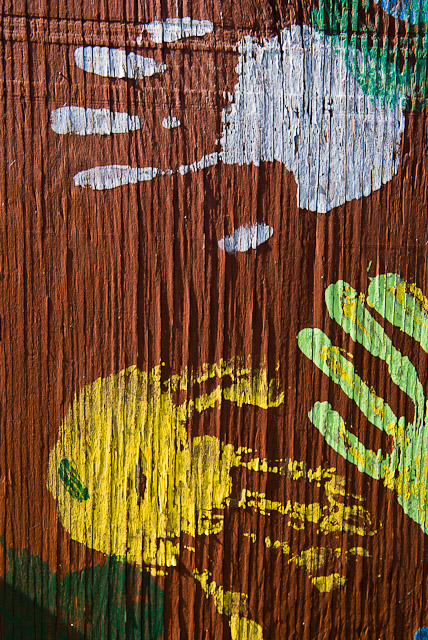
Hands On
Schools cut arts education to focus on standardized test prep.  Critics claim that most teachers are unprepared for roles as multicultural educators since 90% of teachers are white and 36% of students are minorities (Parks, 2004).  Furthermore, as student diversity increases, time restraints might necessitate ignoring certain groups, negating the goal of fully inclusive multiculturalism (Adejumo, 2002).  Alternatively, a broad-brush approach to cultures can lead to superficial treatment.

I believe, however, that the arts are a wonderful way to celebrate diversity and to guide students towards visual and cultural literacy and academic thriving. Therefore, I will counter these criticisms.
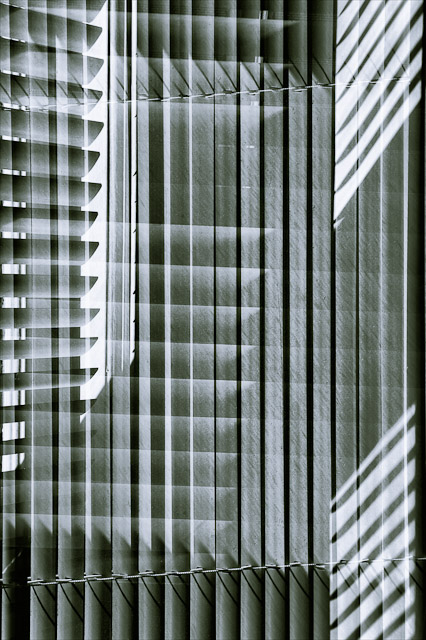
           
 Beyond Black and White (Venetian Blinds)
Sternberg (2010) listed qualities of creative thinking – create, design, invent, imagine, suppose – and gave examples of how these key artistic ideas relate to learning across the curriculum.   For example, challenging students to “Invent a new means of transportation.”  Likewise, Baker (2011) studied the effect of music and arts instruction on the state test performance of 8th graders in Louisiana and concluded that students excluded from arts instruction to focus on math and English did not increase their scores.  However, scores for students that attended music class were significantly improved.
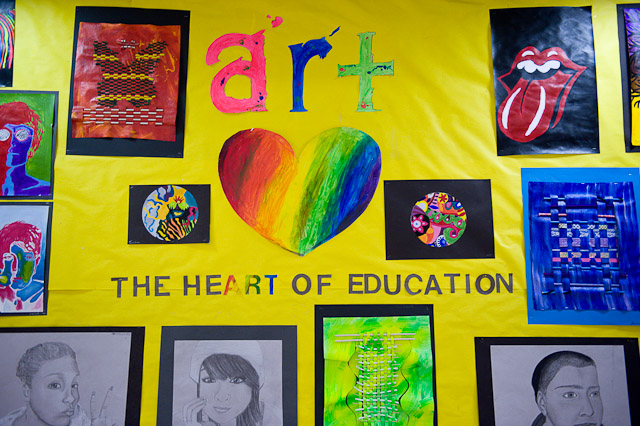
Art: The Heart of Education - Greenfield (MA) High School
The white teacher/minority student ratio will shift as minority populations continue to grow, but teachers learning about their students’ cultures is a key tenet of effective teaching:  know thy students.  Provided teachers work through their own biases and prejudices, Roland (2006) points out that: “The Web offers unprecedented access to the work of countless artists from historically underrepresented cultural and ethnic groups.”   This easy access to material makes for easier inclusion of all cultures that are represented in a classroom.

In our class, James Rollins (whose article mentioned Music In Our Schools Month) reminded us that authentic multicultural education needs to be continuously woven into curriculums, rather than ghettoized into superficial theme months.
Intertwined Synapses (Rail Yard)
Andrea Swenson’s arts exemplar of her elementary students drawing portraits of each other demonstrated not only powerful artistic expression, but also pairing Limited English Proficiency students with native speakers in an engaging task allowed for socialization and English language development.  Likewise, creating an art project relating to English Language Learners’ home cultures activates background knowledge and creates important connections to school learning. (Carrigo)  Prior to his captivating participatory drumming arts exemplar, Shawn McGann noted the many ways music can reach Special Education learners, including building self-esteem and integrating development of cognitive, motor and emotional responses.

Many Kinds, All Corn
The possible downfall of multicultural arts education is the focus on how students are different and different from each other.  These differences can be fodder for teasing or bullying.  Therefore, it is vital that teachers incorporate “species-centrism” into their arts education.  Species-centrism suggests that “we can appreciate that the arts are common to humans of all times and places (Dissanayake, 1992, p.15).”  This central task of creating a unifying connection as “inhabitants of the Earth who also belong(s) to many social groups (Matonis, 2003, p.37)” is key to using the arts as a vehicle for global education and understanding.

From Mandarin to Sanskrit to Jeans
Artist, educator and photojournalist John Nordell received a Masters of Education in Arts Education from Fitchburg State University.
  
Adejumo, C. O. (2002). Considering Multicultural Education.  Art Education, 33-39 

Baker, R. r. (2011, May 1). The Relationship between Music and Visual Arts Formal Study and Academic Achievement on the Eighth-Grade Louisiana Educational Assessment Program (LEAP) Test. Online Submission, Ph.D. Dissertation, Louisiana State University. 212 pp Retrieved from EBSCOhost.

Carrigo, D. Strategies for working with English Language Learners.  Center for Collaborative Education, 1-6

Dissanayake, E. (1992). “Species-centrism” and Cultural Diversity in the Arts.  Seminar Proceedings:  Discipline-based Art Education and Cultural Diversity, Santa Monica: The J. Paul Getty Trust

Matonis, M. (2003). Towards Multicultural Awareness:  Problems and Perspectives.  Dialog and Universalism, 1(2), 27-38

Parks, N. S. (2004). Bamboozled: A Visual Culture Text for Looking at Cultural Practices of Racism.  Art Education, 14-18 

Roland, C. (2006). Promoting Respect for Diversity.  School Arts, 16 

Sternberg, R. (2010).  Creativity is a Choice, Retrieved from http://www.slideshare.net/UTDslides/sternberg-creativity-is-a-decision-3415440


October 19, 2011

Visual Thinking - Creative Comprehension


Street Art
I felt a thrilling chill as my psychology professor at Fitchburg State University explained that the ability to see from multiple perspectives is a key aspect of adolescent cognitive development.  What does Tamika imagine that Judy is thinking about Jose?

Public Works

This idea deeply resonated with me as in my photography classes for aspiring professionals I returned again and again to the concept of photographing a single subject from multiple perspectives. 

Guide Lines
I was so excited because now when I teach adolescents, I can use this photographic approach for the dual purpose of teaching how to see and how to think.

Prius and Possibility
So then, a few days later, I was reading a chapter on text factors for promoting comprehension in Gail Tompkins's Literacy for the Middle Grades.  Discussing the importance of point of view, along with other story structure elements such as plot, setting, characters and theme, the author mentioned several stories told from the viewpoints of multiple characters.  Bingo.  Now I can add a reading component to this concept of learning to think and see from multiple perspectives.

Can't wait for my next class!

P.S. Enjoying conceptual artist Sol LeWitt's wall drawings fundamentally altered and enhanced the way I see and appreciate line - and life.

April 20, 2011

The Weekend: Brought to you by Labor Unions | From Wisconsin to Bangladesh to Boston to Greenfield | Black & White 120 Film Shot with a Yashica Mat!


Have you ever felt guided?  To a person? To a cause?  To a place?  To a theme?

In Boston over Spring Break, I noticed flyer taped to a lamp post for a rally in support of poorly paid tomato farmers organized by The Coalition of Immokalee Workers.  Ever the photojournalist, I jotted down the organizer's website.  I probably noticed the flyer since I was reading Kate Furnival's The Jewel of St Petersburg, a richly textured tale of class conflict and violence in revolutionary Russia.

Bye Bye Borders


A couple of days later, driving to meet a friend for lunch, I listened with increasing disbelief and mounting concern to a Democracy Now report tracing the parallels between the Triangle Shirtwaist Factory fire in New York, 100 years previously, where locked exit doors led to the death of young women workers, to a recent fire in a textile factory in Bangladesh, where again, locked exit doors fatally blocked routes to safety.

The Last Book Buyer?
After lunch, I headed to Newbury Street to photograph evidence of the bankrupt Borders bookstore chain.

Shoppers flocked to the nearby H&M store.  So I went in myself, looked at the labels of the nearest sweaters and knew before I could read the words that the country of origin was Bangladesh.  According to the Democracy Now report, young Bangladeshi women protesting for better working conditions are hosed with dye laden water to facilitate their arrests.

$9.95 - What is the True Cost?
"Where are all these groups of giddy young women coming from," I wondered.  Spring break shopping, perhaps? Some items were two for one.  Imagine drilling straight through the earth from Boston to Bangladesh to compare the lives of these young female shoppers with the young female sweatshop workers.

To find events to document, I signed up on the The Coalition for Immokolee Workers website for labor action alerts.  A week later, even before I received an email about the action, I heard about a rally on a community radio station.

Now Retired from Media, He Takes a Stand

Retired broadcaster Ted O"Brien spoke to the crowd, mentioning historical labor protests, such as the 1912 Bread and Roses textile strike in Lawrence, MA, led by women.

Carpenters Local 108 (Springfield, MA)


In solidarity with the labor protests in Wisconsin, a coalition of labor unions and citizens groups, such as Jobs with Justice, rallied in Greenfield, MA in support of rights for union labor and public workers.

Coalition


The rally took place on April 4, the anniversary of Dr. Martin Luther King Jr's assassination.  At the time of his death, Dr. King was in Memphis to support the sanitation workers strike.

Spend some moments and contemplate these faces and messages:

Stop the War on the Working Class
A Tax on the Corporations - Not Attacks on Workers
Corporations are not People
Hard Hat Flag Stand

March 16, 2011

On the Importance of Touching Things: Unplugging from the Internet


I'm making good on my New Year's resolution to spend less time on the computer.  I devoured Dan Brown's thriller The Lost Symbol.  Then, while visiting family in Cambridge, Mass., I walked into independent Porter Square Books in search of my next read.

The Feel of a Book


Just seeing shelf after shelf of books artfully displayed made my heart sing.  I asked one of the booksellers to recommend an intellectual thriller along the lines of The Lost Symbol.  Minutes later I departed, eager to read Impact by Douglas Preston.

Turned Pages
Later that day I worked on sending cards announcing my inclusion (image below) in The Green Show at the Harpeth Hall School in Nashville, Tenn.  Thinking of each recipient, whether gallery owner, friend, family member or colleague, I wrote:  I am so excited.  My first juried show!  Although I essentially wrote the same message on each card, it felt sincere, compared with a Facebook or Twitter shotgun blast.

Farm Gears
I suddenly wondered if I was spelling "juried" correctly, so I consulted spell check a dictionary. 

Tactilian Living


The next weekend I sat down and read for three plus hours straight and finished Impact, ripping through the pages, my heart thumping.  The experience let me to make a Facebook query, "With a printed book, we call it a page-turner.  What is the analogous term when reading an iPad or Kindle?" The replies:  A finger burner.  A pixel shifter.  A good book.  A finger glider.  Do you have any suggestions?  We are in the age of making up new terminology.

Connected by Color
It has been delightful to receive (appropriately green) congratulatory postcards from friends.  I popped one such card in my camera bag along with a show announcement, thinking to photograph them, only to realize my current book, Clive Cussler's The Silent Sea, was yet another shade of green.

Up until this post, like many bloggers, I would link a book I mention to Amazon.  If a reader bought, I would get a small percentage.  Deciding to put my money where my mouth is, I have stopped this practice.  Instead, I suggest you plug in your zip code at this site to find your nearest local bookstore: Indie Store Finder

For those who like reading on their iPads and shopping locally, take a look at this solution on Baristanet.com

September 24, 2010

Is Photographing Art, Art?


Look | Sensory Inspiration

Three plus decades ago my high school photo class friends and I studied many photographers. However, the work of Tommy Alcorn (a young American photographer whose life was cut short by an accident at age 17) inspired and captivated us.  The black and white images were lyrical and seemed to probe the meaning of life.  Plus, he was a teen like us.

How old the tree?
When I took this image of a Civil War monument last winter in Deerfield, Mass., it reminded me that Mr. Alcorn had photographed statues in France and Italy.  The monument, erected in 1867 and constructed of brown freestone, is topped by a Union soldier who at some point lost his rifle.  Generations before Alcorn, French photographer Eugene Atget often chose such static subject matter. 

Bacchante and Infant Faun (1890)
I took this image of a Frederick MacMonnies bronze sculpture about a week later at The Clark art institute in Williamstown, Mass.  I used an old roll (circa 1997) of ISO 1600 film and only recently dropped it off for developing.


Atget, Alcorn and Me
When I saw the prints I pulled out my Atget and Alcorn books, both out of print, with varying degrees of page yellowing indicating relative and absolute age.

Deep connection I feel here, to my past, to the past.  

Tech Tips: Ansco Pix Panorama camera, no settings to set, 1600 ISO Fuji Neopan film processed and scanned at CTC/Vermont Color labs via Forbes Photo and Frame in Greenfield, Mass.