Showing posts with label Constructions. Show all posts

December 4, 2024

Abstraction Born from Elemental Shapes and Forms: Imprints of a Circuit Board

I love learning. And experimenting with art tools. Perhaps playing is a better term. Found inspiration in a book bequeathed to me by my art loving and collecting parents: Abstract Art by Gerhard Gollwitzer


Abstract Art by Gerhard Gollwitzer
Spheres - Same Shape, Different Sizes

Cylinders - Same Shape, Different Forms
Squeeze in the Sides of a Sphere to Make a Cube
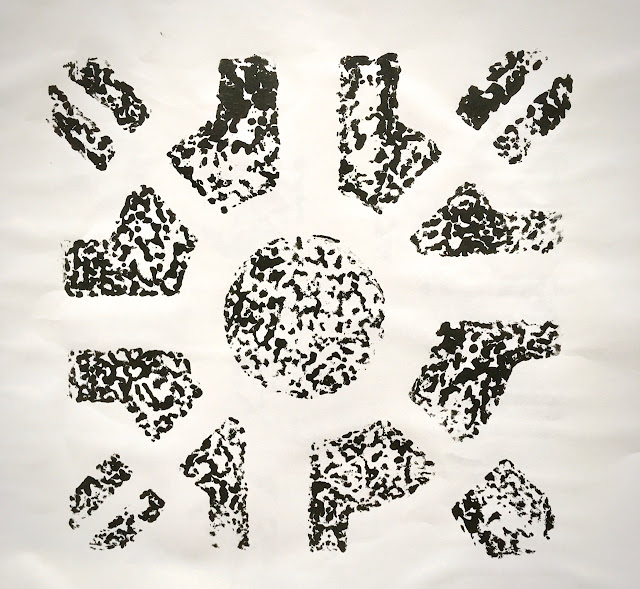
Circuit Board Imprinted on a Flat Piece of Clay Rolled into a Cylinder
Circuit Board - Making Good Use of an Obsolete Computer's Innards
Circuit Board Imprinted on a Flat Piece of Clay 
Crayola Clay - Stale Yet Charming

Professor John Nordell teaches courses in the Arts, Media, and Design Program at American International College in Springfield, Mass. He blogs about the creative process at CreateLookEnjoy.com. Instagram: create.look.enjoy

December 31, 2022

Technology Research: Reviewing the Mirrorless Nikon Z6 II

Some end-of-year need-to-spend-budget money landed us at American International College with a Nikon Mirrorless Z6 II and I finally had a little spare time to create in the midst of my midsemester crush.  Grabbing the Z6, I had not even left my house when light forms on a window shade stopped me in my tracks.

“Light makes photography. Embrace light. Admire it. Love it. But above all, know light. Know it for all you are worth, and you will know the key to photography.” - George Eastman, Founder of Eastman Kodak Company
George Eastman revolutionized photography several times over and made it available to the masses. His quote maintains its juice in our digital age.

In 2007, I acquired an early Nikon DSLR, a D200.  This solid, trusty machine has served me well.  I discovered that I could program the camera to purposely create in-camera multiple exposures.  The process led to my Reality-Based Abstraction series.

The Creation of Triangles - 3 Individual Images Automatically Combined Into a Single Jpeg File Inside the Camera
Employing this multiple exposure technique I discovered with my D200, I used the mirrorless Z6 and shot three images of the light forms, angling my camera in different orientations.

When looking through the viewfinder of a mirrorless camera like the Z6, you view the scene you are photographing on a small digital screen. The scene comes through the lens and hits a sensor which sends information to the screen.  With pre-mirrorless cameras, the scene travels through the lens, bounces off a mirror and up into a corrective prism housed in the viewfinder before reaching your retina. 

When shooting multiple exposures, a digital screen embedded in the viewfinder like this allows to to see your prior shot images in the series and you can thus precisely align each successive image to complete your composition.  Looking through the viewfinder, as I aligned the right hand triangle to just touch the edge of the top shape, I felt like Michelangelo precisely spacing the hands in The Creation of Adam, one of his frescos gracing the Sistine Chapel's ceiling.

The Creation of Triangles - The Same Three Individual Images Combined by Hand After the Fact in Photoshop 
With the Z6, when set to create a multiple exposure, I discovered that the camera keeps each individual file and also combines the images into a single file. With the D200, you only ended up only with the single file of combined images. However, the combined file with the Z6 is the compressed, lower quality, Jpeg image file format, while with the D200, the combined file is a high quality, versatile, Raw format file.

I am baffled and disappointed that with this state-of-the-art camera the combined multiple exposure file is a lower quality Jpeg.  On the plus side, I do end up with each of the individual files. I experimented with bringing the individual images into Photoshop and manually combining the files to end up with a higher quality multiple exposure (see above).  I am vexed by this process, however, as I prefer spending my time creating images, rather than sitting in front of my computer. 

Equally baffling with the Z6, is that the combined Jpeg is in the middle of the sequence of images, rather than at the end, making it difficult to determine which files to combine in Photoshop. (1/5/23 Update: I use Lightroom to view and edit images.  If I sort the images by "File Name" rather than the default of "Capture Time," the combined Jpeg shows up at the end of the sequence of individual images.)

 Michelangelo and Me - Simulation of Aligning the Individual Images for The Creation of Triangles

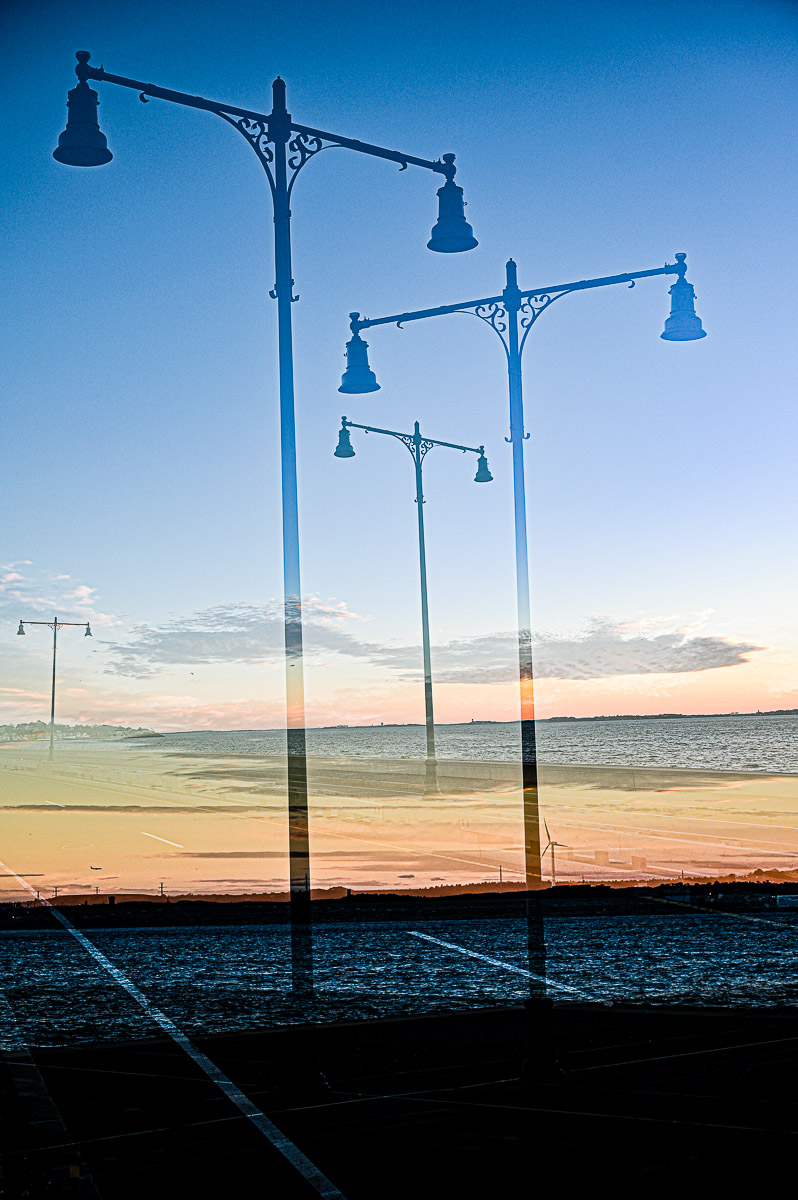
Sketch for Seasons of Life - First of Three Images - Nahant, Mass.
Seasons of Life - 3 Images Combined in the Camera - Jpeg

I think I might prefer the overall solidity of the colors and details in the version below.  And I love the precision the Z6's viewfinder screen preview afforded me while photographing as I nestled the lampposts into the composition. However, I resent spending time in Photoshop combining the images to make the resulting higher quality file.

Seasons of Life -  The Same 3 Images Combined in Photoshop

Old School Construction Finery
Back to light and George Eastman. The late afternoon sun raking across the buildings in Northampton, Mass. was riveting.  Capturing the scene, aligning four successive exposures using the screen in the Z6's viewfinder, brought me into the joyous present moment.

Into the Infinite

While assessing the results of versions combined in-camera versus those combined by hand, I zoomed way in to ascertain the qualities, blowing the images up to 200 percent.  Even then, discerning sharp differences sometimes proved difficult. Perhaps my research was skewed by wanting to only find evidence that backed up preconceived ideas. 

Do you think the above image Into the Infinite was combined in camera, or later by hand in Photoshop?

Professor John Nordell teaches courses in the Visual and Digital Arts Program that he created at American International College in Springfield, Mass. He blogs about the creative process at CreateLookEnjoy.com and teaches online Zentangle drawing workshops.  

December 13, 2022

Eschewing Conventional Art Tools: Block Printing Beach Plums Using Ocean Water Lands Me In the Present Moment

On a blustery day after Thanksgiving,  I wanted to make art in my sketchbook using only found materials at Duxbury (MA) beach.  I like the challenge of eschewing conventional art tools such as paints, inks, pencils, pens, glue and so on.  And I love the physicality of creating outdoors. The crashing waves of the incoming tide, the raindrops falling on my head, the irregular grittiness of natural objects, the taste of salt on the wind and the varied magnificent vistas all brought me into the present moment of encountering life itself.


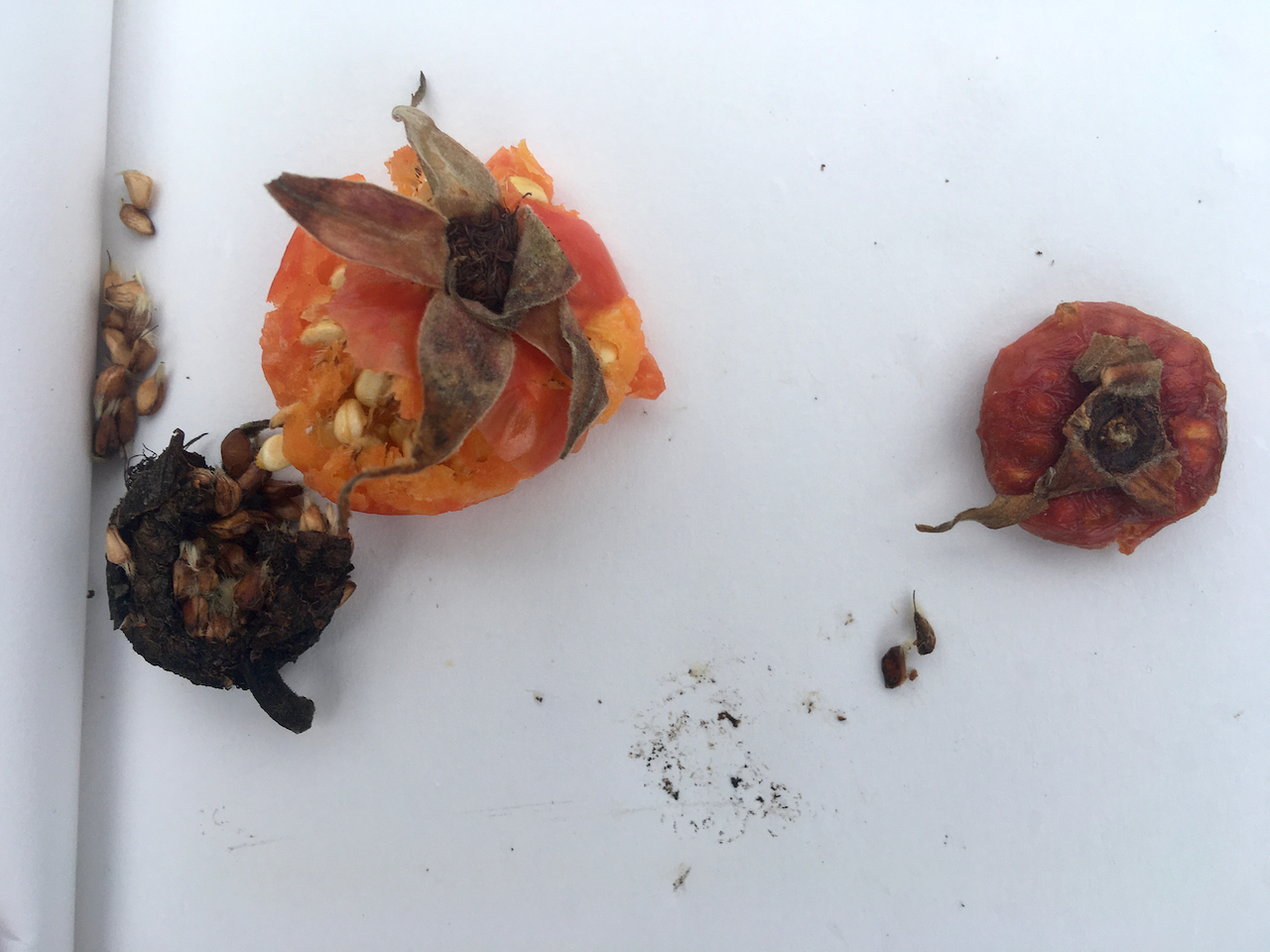
Collecting Beach Plums in Varying Stages of Decay

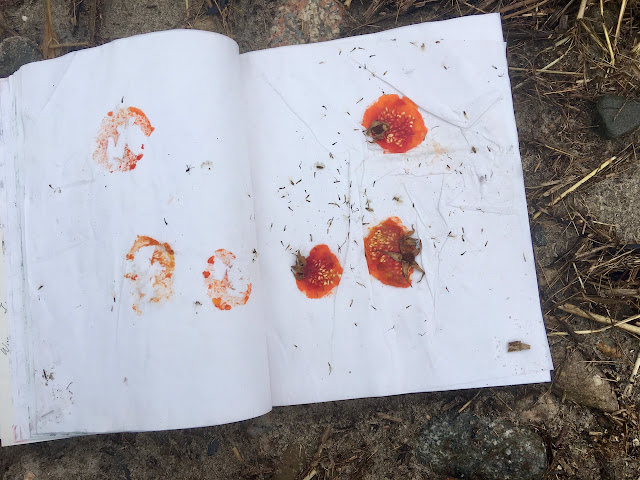
Learning That Moisture is Key When Block Printing Beach Plums

Moistening Sketchbook Pages Before Printing Again

Finding Soft and Ripe Beach Plums

A 180 Pound Printing Press

Cover Art

Evoking a 19th Century Japanese Persimmon Painting

Reveling in the Sensory Moment

Buying a Frame at The Salvation Army

Framing Memories
 
Professor John Nordell teaches courses in the Visual and Digital Arts Program that he created at American International College in Springfield, Mass. He blogs about the creative process at CreateLookEnjoy.com and teaches online Zentangle drawing workshops.  

February 20, 2022

Patterns and Possibility - Reuse Before Recycling

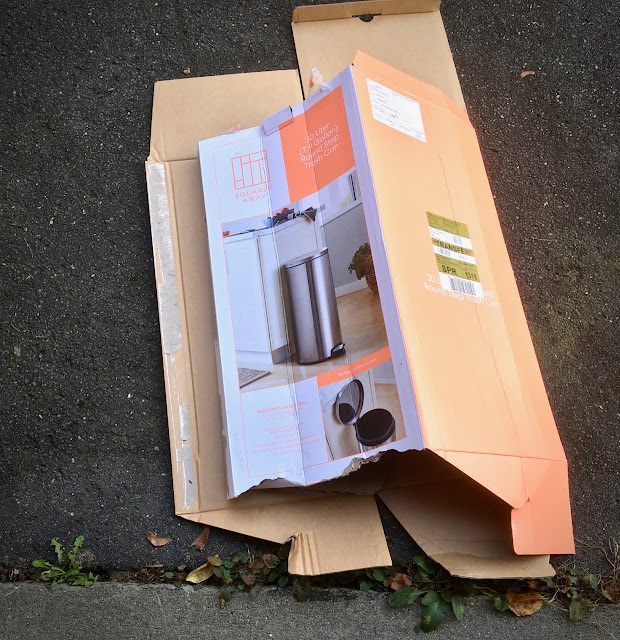
Trash day and I hustled to flatten boxes and set out the bins before heading to teach at American International College.  The day before I had spontaneously decided to teach an introductory block print lesson to my History of Art class.

Trash Can Packing Box Trash

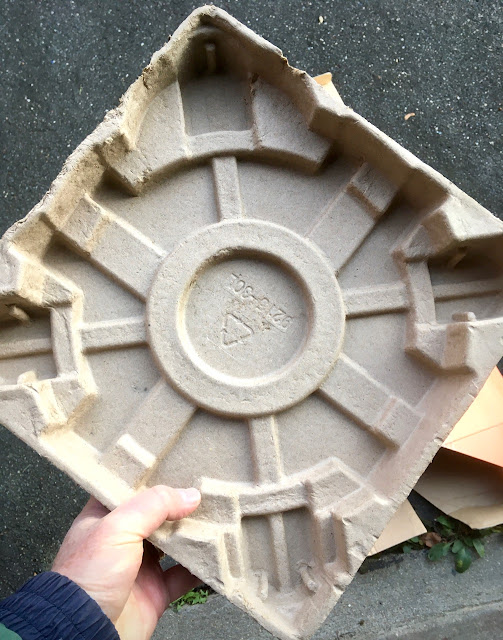
I had chosen a simple pattern to teach.  However, I fell in love with this gorgeous cardboard nest for my recently purchased cylindrical trash can.

Patterned Seat

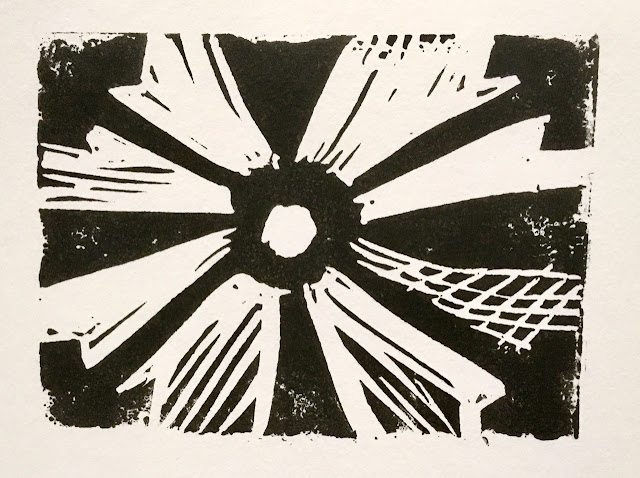
Within hours of this discovery, I had deconstructed the pattern into elemental shapes and taught a one hour introduction to block printing.  As I Certified Zentangle Teacher, I am familiar with this process of noticing patterns in the world and then teaching workshop participants how to draw them.

The Prof's Show and Tell

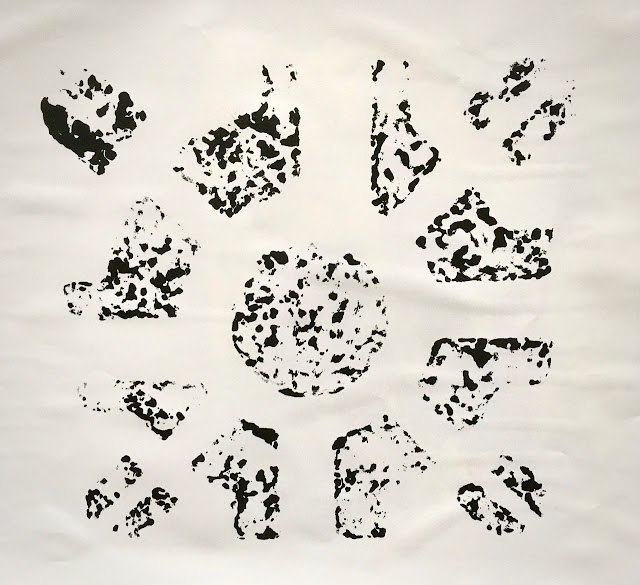
As students printed their carved blocks, I inked the bottom of the cardboard packaging and pushed it down on paper.

Not a Deep Impression

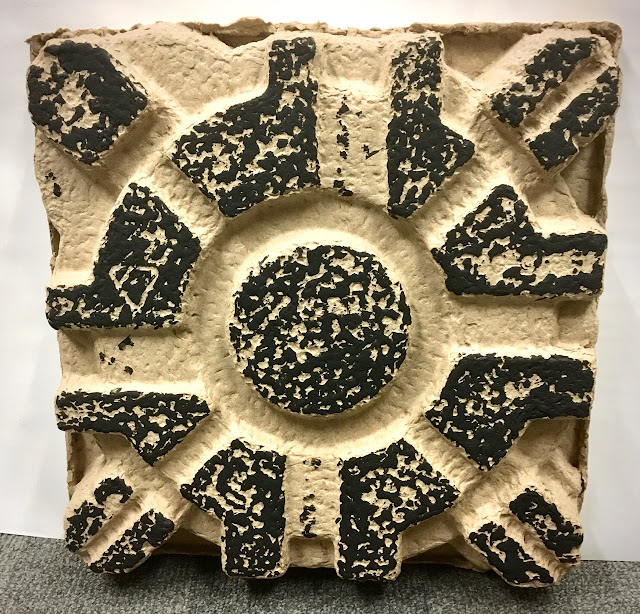
After this first iteration, I refined my creative process by applying more ink...

Packaging Totem

... and this time pressing the paper down onto the upturned inked cardboard.

That's What I am Talking About

Here are some results from students:

A Complement to Looking at Art

A novice printer "accidentally" moved his block while printing, laying down two slightly offset impressions, creating this lovely, energized offering.  Where would we be without mistakes?

Only Way to Learn is to Live (Chapter Title from The Midnight Library)


John Nordell teaches courses in the Visual and Digital Arts Program that he created at American International College in Springfield, Mass. He blogs about the creative process at CreateLookEnjoy.com 

April 19, 2020

X-Ray Mirrors: Visible Unseen Identities in Photographs


As a college professor, I have been scrambling to generate projects that my photography students can complete at home. The photomontage below is my test run of a Windows and Mirrors assignment, inspired by an excerpt from Sytze Steenstra’s book Song and Circumstance, about the work of artist and musician David Byrne, of Talking Heads fame.

According to an already classical distinction, proposed by John Szarkowsky, leader of the Department of Photography of New York’s Museum of Modern Art, photography can be approached “as a means of self-expression (as a mirror),” and “as a method of exploration (as a window).” Bryne freely combines both approaches, and casually erases the distinction:

Inside Looking Out and Outside Looking In
"Windows are mirrors through which we see ourselves reflected. Our view is colored by our prejudices, history and class.  We see reflected our perceptions of the landscape, the skyline, the people on the street, the weather, and what they mean to us.  Photographs are also mirrors.  In them we see reflected our own internal biases, our own assumptions, our own presuppositions. [...]  What we don’t see is a reflection of our face, we see instead a reflection of our interior.  An X-ray mirror."

I want to grow as an artist and take things less literally.  Obviously, this was not the case here.  However, Bryne's ideas conjured up an assignment that students could photograph at home and a device for me to teach Photoshop techniques.

Perhaps this incomplete draft allows for more viewing ambiguity:

Open Windows - Incomplete or Completely Better
The other day, I looked through a prized possession:  the exhibition catalog from a retrospective of painter Lyonel Feininger.  His works make me swoon.  One painting, Mill Windows, changed my life by sparking my Reality-Based Abstraction series.

Dotted among the paintings were photographs by, and of, Feininger.  The black and white images brought me back to a different aesthetic and time.  Looking up from the couch, I saw this cloud and wanted to capture it in black and white.

Portal to the Past and Present
Feininger sketched scenes before painting them.  He also sometimes took pictures.  I have previously described how I usually take a single frame as a sketch prior to layering a series of images into an in-camera multiple exposure.

The above window can thus become:

Digital Prism
Until now, I considered the image combing to be complete in the camera, rather than additional after the fact manipulation.  However, likely informed by a recent spate of teaching Photoshop techniques, I combined multiple versions of the above image by flipping and flopping it:

Reflections on the Inner Light
Bryne asserts that what photographers include and omit in their frames inform us equally about the creator's identity.  Along these lines, I love this quote from portrait photographer Richard Avedon, "My portraits are more about me than they are about the people I photograph."

John Nordell teaches courses in the Visual and Digital Arts Program at American International College in Springfield, Mass. He blogs about the creative process at CreateLookEnjoy.com  Instagram: @john.nordell

March 28, 2020

The Power and Importance of Traditional Strengths in Non-Traditional Times


At the start of the semester in my Cultivating Creativity class, I ask students to note three of their top character strengths from the VIA Institute on Character's listing of strengths.  The idea is to start the semester with confidence in one's abilities.  I invite you identify some of your key strengths.  Click here for the list.  

I kept walking past my camera bag thinking, "I really should take some pictures."  Distracted by the impact of Covid-19 on my life, and learning how to shift my face-to-face courses to online delivery, my camera remained untouched.

This Sketch Became... 
Finally, I grabbed it and started shooting.

X-Ray Vision


It felt so good to take pictures.  This process has been a love of mine for nearly 5 decades.

This Sketch Became... 


Preparing to take a multiple exposure, I take a single frame to test for exposure, like an artist's sketch.

Raw File

The layered images that emerge from my digital camera are flat looking, so I treat the files to pull out vibrancy and details.  In the case below, I reversed the above image to look like it was a color negative.

Home


A mere ten minutes of shooting opened my heart and mind to a present moment of peace.  I printed the images out and put them in my kitchen.  Each time I walk by and see them, I smile.  In the face of current uncertainty, feeling competent and creative helps me feel a sense of needed normality.

John Nordell teaches courses in the Visual and Digital Arts Program at American International College in Springfield, Mass. He blogs about the creative process at CreateLookEnjoy.com   

October 7, 2019

From Seed To Fruition - My Aerial Images of Large Scale Drawings Chosen for Western Massachusetts Visual Arts Biennial


Opening reception: In conjunction with Arts Night Out, Friday, October 11th, 5:00 - 8:00PM, at Forbes Library’s Hosmer Gallery, 20 West St., Northampton MA

Exhibition jurors: Donna Gates, Gallery Director and Curator, Salmon Falls Gallery; Jameson Johnson, Founder and Editor in chief, The Boston Art Review; Robert Wiesenburger, the Associate Curator of Contemporary Projects for The Clark Art Institute.

Friend and artist Keris Salmon recently introduced me via email to an artist friend of hers, Anna Hepler. When Hepler and I met (we both live in Greenfield), I learned that she often originates a certain idea/form and then manifests the same idea/form in a variety of media, such as clay, wood and block printing. Her multiple renderings of a single idea in a various ways planted a seed in my creative vision. 

Drawing with Dew

I sometimes do Zentangle drawing, an art form that blends drawing and meditation. By drawing repeated, structured patterns, abstract beauty emerges. Normally, with Zentangle, I use a pen and pencil, drawing on 3.5 inch squares of paper. Inspired by Hepler’s multifaceted approach, I wondered what it would be like to make a computer generated 3D print of a Zentangle pattern and then block print it, or draw on a scale so large that the image would only be fully visible from the sky.

Rick's Paradox - Straight Lines Create Curves - Zentangle Drawing (Not in the exhibition)
My personal artistic vision is one of open-minded exploration. While I love to go back in time, such as drawing with ink made from crushed berries, I also warmly embrace the use of contemporary digital tools. The fruition of my project combined elemental mark making using my feet with using a drone for aerial imaging of the large-scale artworks.

Drawing with Sand


One time I drew by shuffling my feet through dewy grass on the field behind Four Corners School in Greenfield, Mass. Another time, at the Green River Swimming and Recreation Area, I made lines in the sand with a single foot. At Walden Pond in Concord Mass., my drawing straddled the shoreline, with some lines continuing from the sandy beach under the pond’s surface. In each location, upon completing the drawing, I sent my drone aloft to photograph the work from on high.

Drawing with Sand and Water (Not in the exhibition)


My project bore so many fruits: ephemeral artwork that lasted mere hours before evaporating or being walked on; cardiovascular benefits as I worked up a sweat by walking/drawing; a mindfulness practice of literally taking it one step at a time, and a necessity to focus on the process, as I could not even see the product without flying a drone into the sky!

Thank you Anna Hepler for planting the seed.

It takes a village...  Big thanks also to former students Jason Kan and Zach Bednarczyk who have taught me everything I know about piloting drones for aerial imaging.  Thanks also to Jason for emboldening me to push the limits when editing images in Lightroom.  I would be remiss to not mention Cheryl Cianci, who I met at a gallery in Hartford. Her enthusiasm about the Zentangle drawing method led me to become a Certified Zentangle Teacher.

Professor John Nordell teaches courses in the Visual and Digital Arts Program at American International College in Springfield, Mass. He blogs about the creative process at CreateLookEnjoy.com  Instagram: @john.nordell

March 18, 2019

Tinkering & Hacking :: Transforming an Arts Education Convention Bag to Render it Both More and Less Functional


Researching the educational process at the 2019 National Art Education Association convention in Boston.  How might experimental and democratic experimental educational experiences lead to deeper creativity and meaning-making compared with structured learning based on a fixed intent, process, and final product to be assessed?


Thanks to presenters Tyson Lewis, James Thurman, and Peter Hyland.  Thanks also to volunteer videographers Jamie Andrade and Laura Reeder.

Professor John Nordell teaches courses in the Visual and Digital Arts Program at American International College in Springfield, Mass. He blogs about the creative process at CreateLookEnjoy.com

August 22, 2016

(d)evolution: Questioning Progress: Is Technology Your Servant, or Master?


"Remember, technology is a great servant, but a terrible master."
- Stephen Covey, author of 7 Habits of Highly Effective People

Don't get me wrong, I love digital technology.  The pixel revolution transformed how I photograph and propelled me to become a filmmaker.

However,  I am concerned when it appears that for some people technology mediates daily existence.

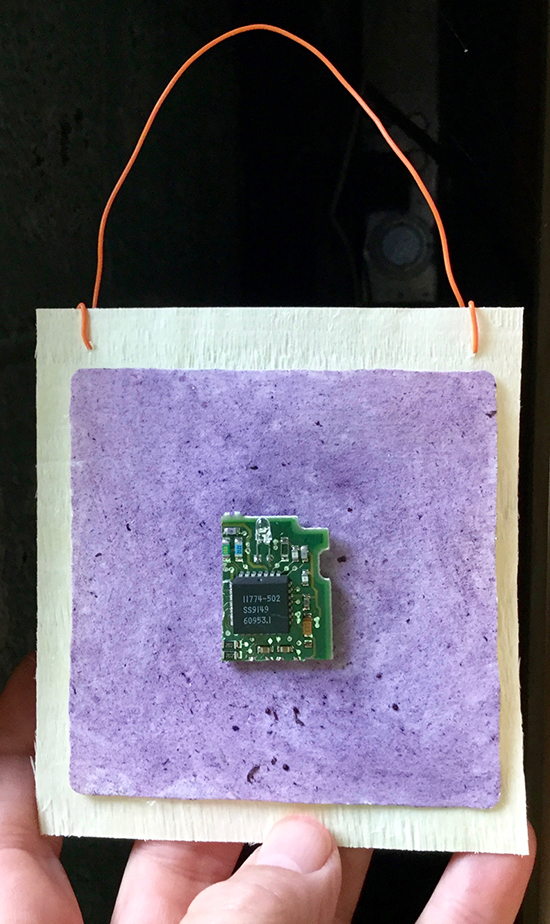
(d)evolution
This assemblage combines natural materials such as blueberry and raspberry ink with a hacksawed circuit board from an obsolete computer.  My artwork was accepted in The Greenfield Local Cultural Council's Fourth Annual Juried Show, “Changing.”  The opening reception is Friday, September 2, 5-8 p.m. at Greenfield Community Television (GCTV), 393 Main Street, Greenfield, Mass.

Side of a Strawberry Box
This video explores my creative process that led to creating the purple paper:


I was interviewed by GCTV about (d)evolution.

Community Television
My interview comes on at 1:50 seconds:


I invite you to consider the role technology plays in your life.  Is technology your servant, or your master?  Does technology make our lives better?  Simpler?  Easier?

Periodically staining your fingers with berry juice might be a good practice to foster perspective.  Or, perhaps, just making something.  A few generations ago, we were all makers.

Professor John Nordell teaches courses in the Visual and Digital Arts Program at American International College in Springfield, Mass. He blogs about the creative process at CreateLookEnjoy.com  Instagram: @professornordell