Showing posts with label exposure. Show all posts

May 9, 2023

Deconstructing Digital Precision and Predictability to Achieve Analog Uncertainty and Variability

Early in my post-photojournalist teaching career, Douglas Dubler came to speak at Hallmark Institute of Photography.  Contrary to conventional wisdom, Dubler explained how he liked to sometimes overexpose digital images.  I gasped. 
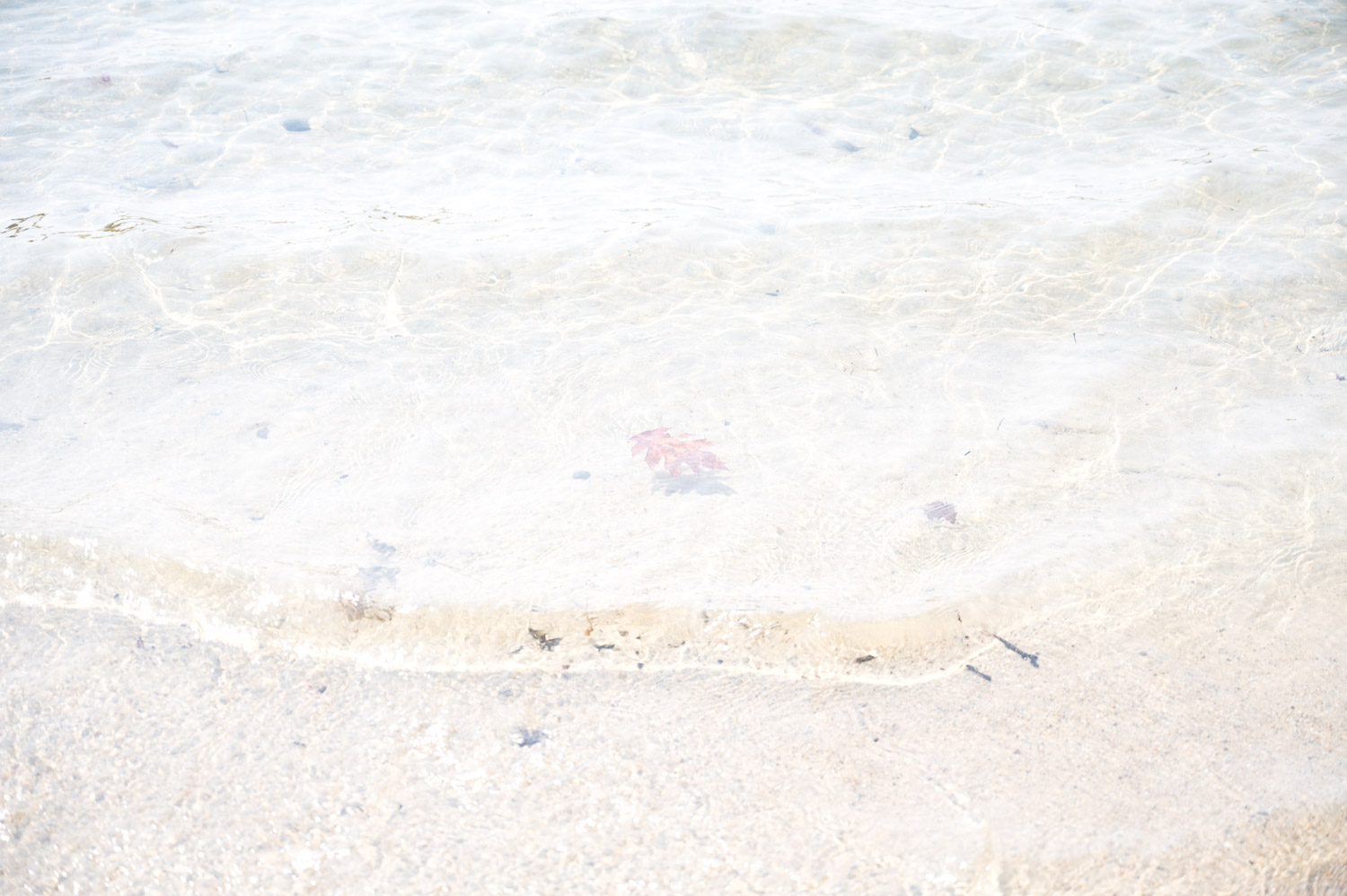
Lunar Pond

Fast forward some 15 years.  I am at Walden Pond in Concord, MA, photographing with a Nikon Mirrorless Z6 II. When shooting in manual mode, I can see a real time preview of my exposures. I thought of Dubler's explorations and intentionally overexposed this image.

Essence of Woods, Fragility of Water and Sky

Along with intentionally overexposing the images, I deliberately shot images out of focus in order to abstract the forms into their essences.

I found these out of focus sun sparkles captivating:

However, the dark background of the sandy pond bottom detracted from the effect I was hoping for.

Going With the Flow

Striving to highlight the highlights, I shot an in-camera double exposure, combining the sun sparkles with a photo of trees, clouds and sky:

Sunny Skies

Hmm.  I liked this, but wanted to isolate the sparkles and avoid an edge-to-edge overlapping of images.

So, I held my hand in front of the lens to block off half the frame:

Masking by Hand

Another in-camera double exposure that overlaid the above image with one of trees and sky led to a subtle layering of images and the realization of my vision.  (I have written previously about that when shooting multiple exposures with the Z6, the camera combines the images, yet also retains each individual image file.)

From Precision to Uncertainty

For me, the muted and naturalistic colors of the image have the look of a double exposure created with a film camera. The orange glow at the bottom evokes a light leak.

Analog film experimenter and explorer, Beth "I shoot film" Machiorwoski, who sometimes runs a roll of undeveloped film through the dishwasher before processing it, taught me to find beauty and joy in the vicissitudes and vagaries of film photography.

I am always excited to deconstruct digital precision and predictability to achieve analog uncertainty and variability.  Thank you Beth and Douglas for guiding me on this journey!

Professor John Nordell teaches courses in the Visual and Digital Arts Program that he created at American International College in Springfield, Mass. He blogs about the creative process at CreateLookEnjoy.com and teaches online Zentangle drawing workshops.  

February 17, 2021

The Glory of "Mistakes"

 This image was a mistake  It should not look this good.

Bark Snow Branch

I reveled in the pre-sunset light on a ridge above Greenfield, MA.  I thought my camera was set for automatic exposure when I captured the multiple exposure above, layering three shots on top of each other in the camera.  However, since the camera was actually set to determine the exposure manually, technically some of the layers were underexposed, which happily allowed for a smooth blending of textures.

I am Light

I later captured the same three subjects with the proper exposure. However, unlike my "accident", the result looked like mush. Running the file through a serious Photoshop filter fortunately made for this pleasing result:

Black Sheep
The image below records my footsteps as I captured the images.

Photographicus Americanus Tracks
I teach the Zentangle method of drawing. We use special pencils that have no eraser,  a physical reminder that there are no mistakes. Life does not come with an eraser.

Perhaps this spiritual artistic training allowed me to continue reveling and creating, rather than berating myself for making an "error".

John Nordell teaches courses in the Visual and Digital Arts Program at American International College in Springfield, Mass. He blogs about the creative process at CreateLookEnjoy.com   Instagram: @john.nordell

November 25, 2020

"... and not, when I came to die, discover that I had not lived."


“I went to the woods because I wished to live deliberately, to front only the essential facts of life, and see if I could not learn what it had to teach, and not, when I came to die, discover that I had not lived."  - Henry David Thoreau, from his book, Walden; or, Life in the Woods

Daytime Fireworks


My 1.5 hours spent yesterday at Walden Pond pales in comparison with the two years Thoreau spent living there writing the journals he later distilled into a book.  However, in my own way I strive to emulate Thoreau and go the woods to "...front only the essential facts of life."

Pining for Life

Sometimes I have a camera with me when exploring the natural world.  Taking pictures brings me into the moment of living and helps me to "...see if I could not learn what it (the woods) had to teach..."

Impression of Woods
With these first three images, I used a Nikon D200 DSLR camera which allowed me to control the look of the explorations, whether layering frames via in-camera multiple-exposures, adjusting the aperture to control depth of field, or choosing a slow shutter speed and then swiping my camera through the air during the exposure.  The following images were captured with an iPhone.

Thoreau with a Replica of his Cabin - The Original Tiny House

Using a fully featured digital camera (DSLR) contrasts sharply with snapping iPhone shots.  There are pros and cons.  On the plus side, the DSLR allows for the control and variation demonstrated above.  However, the camera is bulky.  It does not fit in your pocket.

The iPhone rests in my pocket, ready in seconds to capture fleeting moments.  Nothing to adjust.  It is easy to hold in one hand while taking pictures.  I love to touch history and an iPhone easily allows for this process.

That Way

To live, to love, to learn, to leave a legacy. This catch phrase from 7 Habits of Highly Effective People author Stephen Covey often finds its place in my morning goals.

Following Thoreau's breadcrumbs to Walden Pond on a digitally mediated visit helped me define to live. "... and not, when I came to die, discover that I had not lived."  I want to live.

John Nordell teaches courses in the Visual and Digital Arts Program at American International College in Springfield, Mass. He blogs about the creative process at CreateLookEnjoy.com  Instagram: @john.nordell

April 19, 2020

X-Ray Mirrors: Visible Unseen Identities in Photographs


As a college professor, I have been scrambling to generate projects that my photography students can complete at home. The photomontage below is my test run of a Windows and Mirrors assignment, inspired by an excerpt from Sytze Steenstra’s book Song and Circumstance, about the work of artist and musician David Byrne, of Talking Heads fame.

According to an already classical distinction, proposed by John Szarkowsky, leader of the Department of Photography of New York’s Museum of Modern Art, photography can be approached “as a means of self-expression (as a mirror),” and “as a method of exploration (as a window).” Bryne freely combines both approaches, and casually erases the distinction:

Inside Looking Out and Outside Looking In
"Windows are mirrors through which we see ourselves reflected. Our view is colored by our prejudices, history and class.  We see reflected our perceptions of the landscape, the skyline, the people on the street, the weather, and what they mean to us.  Photographs are also mirrors.  In them we see reflected our own internal biases, our own assumptions, our own presuppositions. [...]  What we don’t see is a reflection of our face, we see instead a reflection of our interior.  An X-ray mirror."

I want to grow as an artist and take things less literally.  Obviously, this was not the case here.  However, Bryne's ideas conjured up an assignment that students could photograph at home and a device for me to teach Photoshop techniques.

Perhaps this incomplete draft allows for more viewing ambiguity:

Open Windows - Incomplete or Completely Better
The other day, I looked through a prized possession:  the exhibition catalog from a retrospective of painter Lyonel Feininger.  His works make me swoon.  One painting, Mill Windows, changed my life by sparking my Reality-Based Abstraction series.

Dotted among the paintings were photographs by, and of, Feininger.  The black and white images brought me back to a different aesthetic and time.  Looking up from the couch, I saw this cloud and wanted to capture it in black and white.

Portal to the Past and Present
Feininger sketched scenes before painting them.  He also sometimes took pictures.  I have previously described how I usually take a single frame as a sketch prior to layering a series of images into an in-camera multiple exposure.

The above window can thus become:

Digital Prism
Until now, I considered the image combing to be complete in the camera, rather than additional after the fact manipulation.  However, likely informed by a recent spate of teaching Photoshop techniques, I combined multiple versions of the above image by flipping and flopping it:

Reflections on the Inner Light
Bryne asserts that what photographers include and omit in their frames inform us equally about the creator's identity.  Along these lines, I love this quote from portrait photographer Richard Avedon, "My portraits are more about me than they are about the people I photograph."

John Nordell teaches courses in the Visual and Digital Arts Program at American International College in Springfield, Mass. He blogs about the creative process at CreateLookEnjoy.com  Instagram: @john.nordell

March 28, 2020

The Power and Importance of Traditional Strengths in Non-Traditional Times


At the start of the semester in my Cultivating Creativity class, I ask students to note three of their top character strengths from the VIA Institute on Character's listing of strengths.  The idea is to start the semester with confidence in one's abilities.  I invite you identify some of your key strengths.  Click here for the list.  

I kept walking past my camera bag thinking, "I really should take some pictures."  Distracted by the impact of Covid-19 on my life, and learning how to shift my face-to-face courses to online delivery, my camera remained untouched.

This Sketch Became... 
Finally, I grabbed it and started shooting.

X-Ray Vision


It felt so good to take pictures.  This process has been a love of mine for nearly 5 decades.

This Sketch Became... 


Preparing to take a multiple exposure, I take a single frame to test for exposure, like an artist's sketch.

Raw File

The layered images that emerge from my digital camera are flat looking, so I treat the files to pull out vibrancy and details.  In the case below, I reversed the above image to look like it was a color negative.

Home


A mere ten minutes of shooting opened my heart and mind to a present moment of peace.  I printed the images out and put them in my kitchen.  Each time I walk by and see them, I smile.  In the face of current uncertainty, feeling competent and creative helps me feel a sense of needed normality.

John Nordell teaches courses in the Visual and Digital Arts Program at American International College in Springfield, Mass. He blogs about the creative process at CreateLookEnjoy.com   

December 15, 2019

The Joy of Creating


Look at the effect of 8 minutes of taking pictures followed by a couple of minutes collecting shell fragments at the beach on blustery December morning in Lynn, MA

The Joy of Creating
Blank Canvas


Shakti - Multiple Exposure


Gulls drop clams from the sky to break the shells on the sand and then eat the contents.  Thinking of my Visual and Digital Arts students, I collected shell fragments to be used in class for creating cultural jewelry.

Cycles of Life
Later, I photographed an in-camera multiple under the tracks in downtown Lynn.

City of Murals


Professor John Nordell teaches courses in the Visual and Digital Arts Program at American International College in Springfield, Mass. He blogs about the creative process at CreateLookEnjoy.com  Instagram: @john.nordell