Showing posts with label Creative Economy. Show all posts

February 28, 2014

Pencil Eyes - - Seeing with Art Tools


Midday:  Teaching drawing at American International College.  Cultivating creativity.  Readying students for next week's visit to the Springfield Museums.

Early Evening:  Attending art gallery event at UMass, Ahmerst.  Artist Kim Carlino and Curator Eva Fierst.  Seeing beauty and question marks.  Inspiring art and dialogue.  Listening.  Thinking of students at museum.  Compelled to draw. 

Artist, wearing Glasses
Night: Dining at Sakura in Northampton, Mass.  Buffet.  Man talking into cell phone earpiece cramming plate with sushi.

Man Lifting Himself Up
Eating and drawing.  Waitresses texting in Chinese.

Texting Waitresses
Noticing sketching, waitress saying, "Beautiful."

Pointing, saying, "This is you two texting."  Language barrier to communicating sucessfully.

Pointing, again, hoping: "Those are your ponytails."  Comprehending.  Calling friend over.  Laughing.

Screen Culture
Returning to texting.  Returning to drawing.

May 8, 2010

Destination Dia: Beacon - Part 3


Create | Bring Into Being

My journey through industrial history and the impact of the arts on mill towns landed me in Beacon, NY, where I visited Dia: Beacon, a huge contemporary art museum situated in a former Nabisco printing facility. As I enjoy photographing in a variety of modes, my report includes photojournalistic and abstract works. The abstractions are in-camera multiple exposures.

The history/future of manufacturing in the Northeast and the arts as economic engine are complex issues. I believe my Reality-Based Abstractions can certify the complexity, yet also illuminate integrated trends.
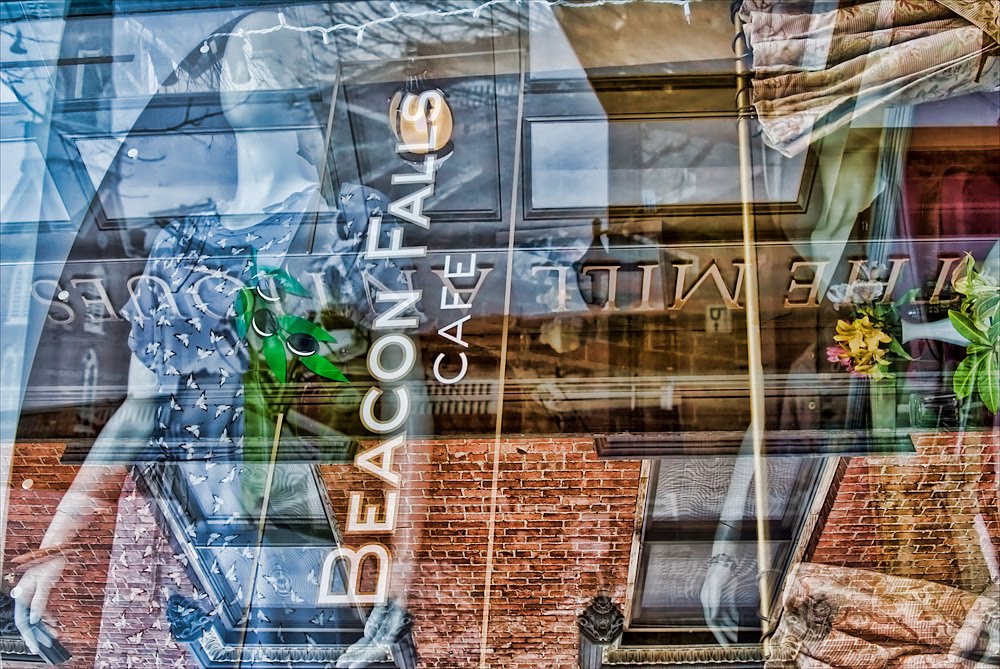

Cafe, Boutique, Antiques
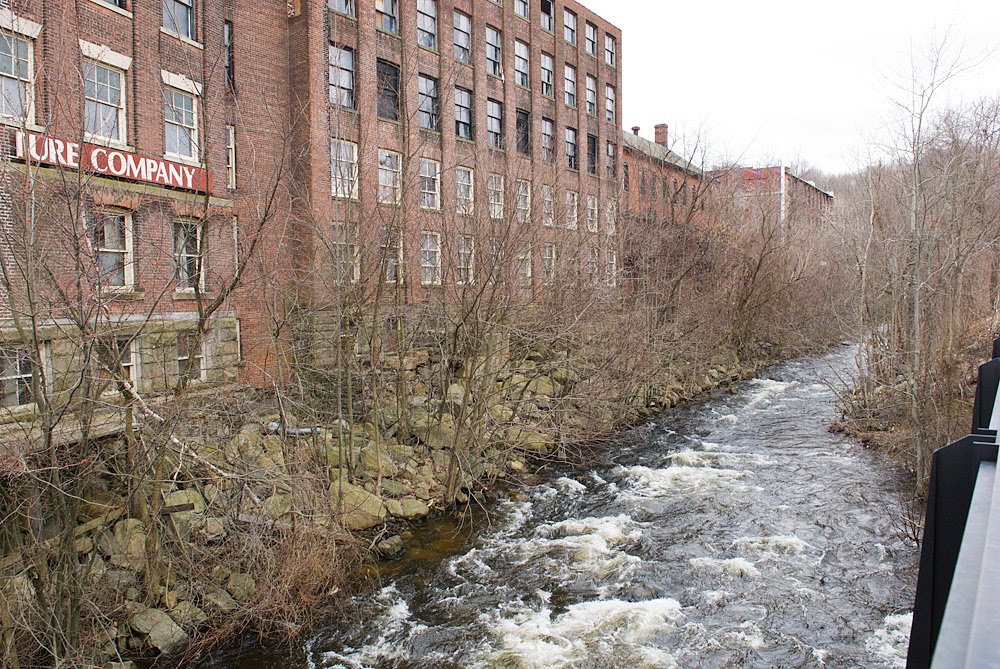
Beacon Falls Cafe (an American Bistro), The Mill Antiques (New England country antiques), and Echo (a designer boutique) are located at one end of Main Street in Beacon. Across the street empty mill buildings awaiting new life line Fishkill Creek.


Water was Fuel
Mill towns sprang up along waterways as rushing liquid powered the initial mechanization of industry. Beacon fell on hard times in the 70s when manufacturing plants shut down.
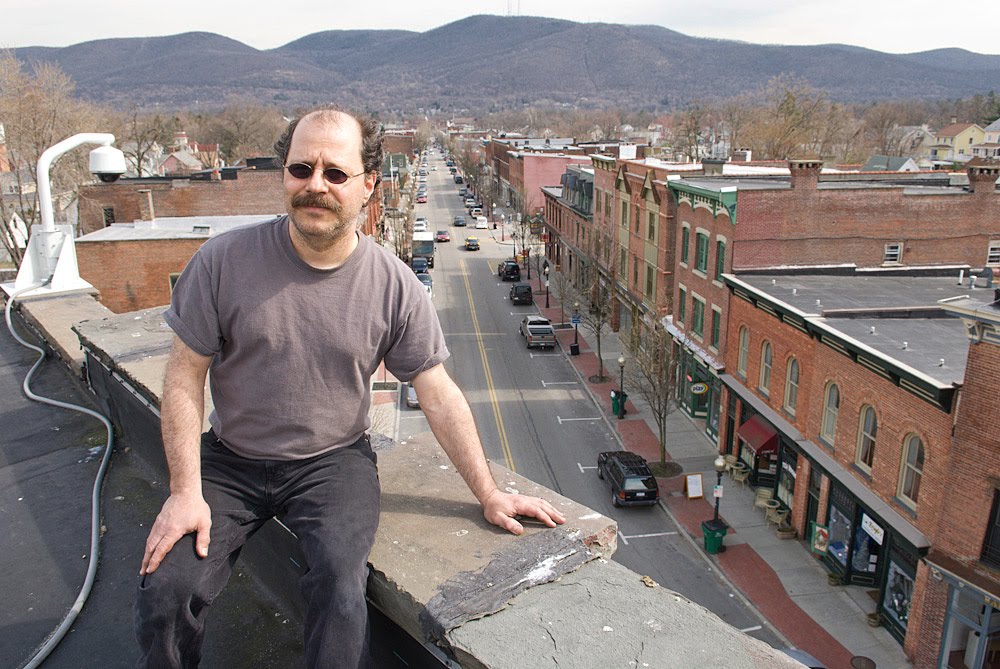

Artrepreneur
Glass artist Michael Benzer sits on the roof of a former fire station that houses his studio and store on Main Street. Mr. Benzer has worked in the area for over two decades, but moved his operation to Main Street in 2003 because he learned that Dia: Beacon was coming to town that year. Another early pioneer Carl Van Brunt, opened Van Brunt Gallery. Other galleries and restaurants catering to the arts trade have set up shop as well.
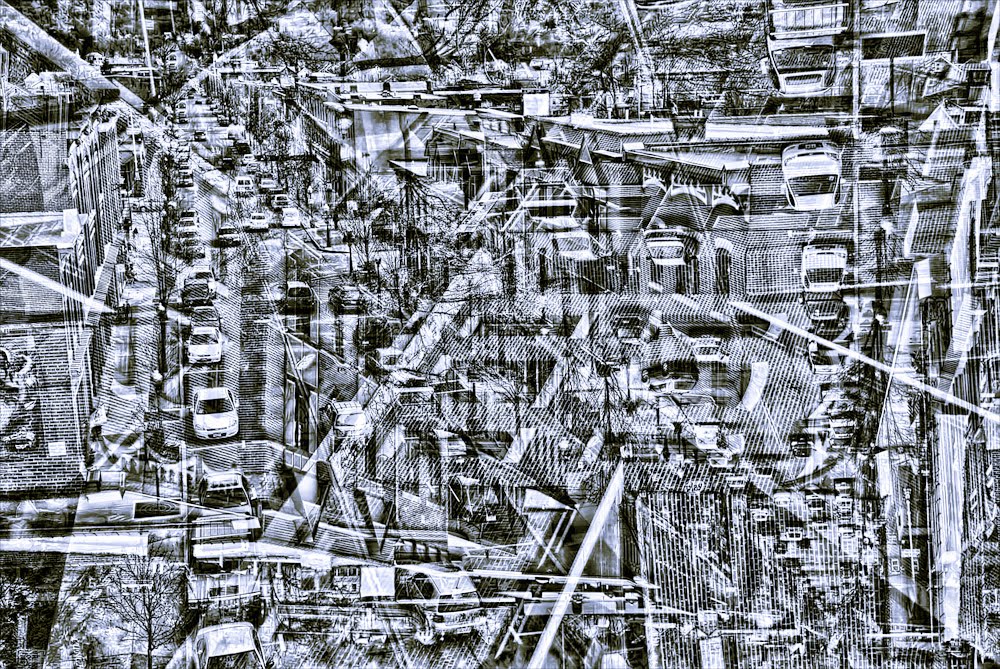

Main Street
Artist and entrepreneur Benzer describes a confluence of factors leading Beacon's revival. Along with the creative economy spurred by Dia: Beacon, he notes changing demographics. Beacon sits on the Metro North rail line, 60 miles (80 minutes) North of New York City. After 9/11, some people that moved out of NYC settled in this area. Also, telecommuters can work primarily at home, perhaps only making the long commute into the city a couple days a week.
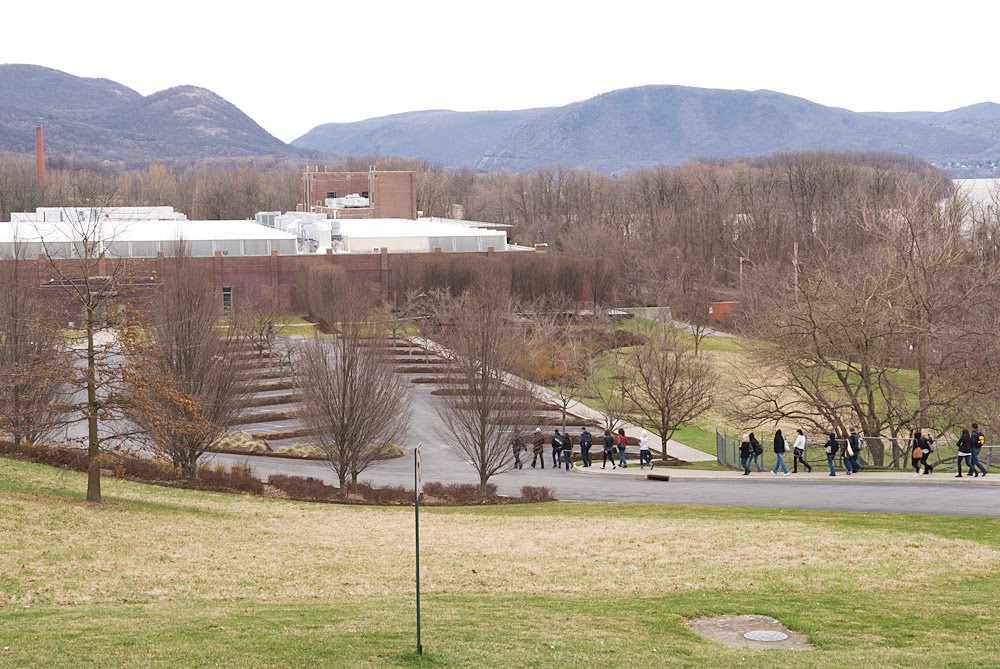

Art Students from Oregon Arrive at Dia: Beacon
Art and architecture students from the University of Oregon on their spring break trip to New York City head towards Dia: Beacon from the nearby train station. Trains that once imported raw materials to the Nabisco plant and then exported the printed boxes, now import art enthusiasts from around the world and export commuters to New York City.
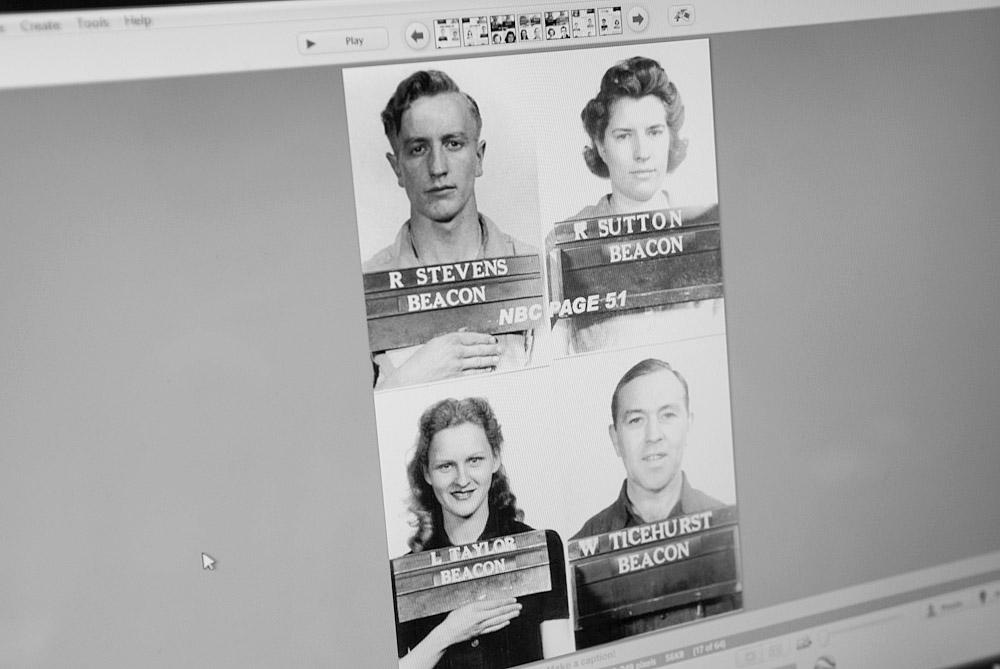

They Printed the Boxes for Nabisco Cookies
I found these images of former plant workers at the Howland Public Library in Beacon. Their former plant is stripped down to the basics of floors, walls and windows to showcase sprawling exhibitions by the likes of Andy Warhol, Agnes Martin, Dan Flavin and Sol LeWitt. Take a look.

John Ballo worked for at the plant for 42.5 years and has lived in Beacon for 83 years. Such was his workplace enjoyment that he used to sing while repairing the huge printing presses. The contemporary art on display does not impress him. He explained to me that large holes cut into the museum floor on the site of his former machine shop lack the talent and artistry of Italian sculptors carving figures out of marble, complete with detailed veins and eyelashes, "A pile of sand, a pile of broken glass are not as attractive as one of the machines (presses) moving at a terrific speed."

Crossroads
According to Mr. Ballo, the city granted Dia: Beacon tax free status. He is annoyed that the museum, which has enough money and social position to present a plain wooden box as art, should receive town services for free, while a "90-year-old woman hanging by a thread" struggles to pay her taxes.
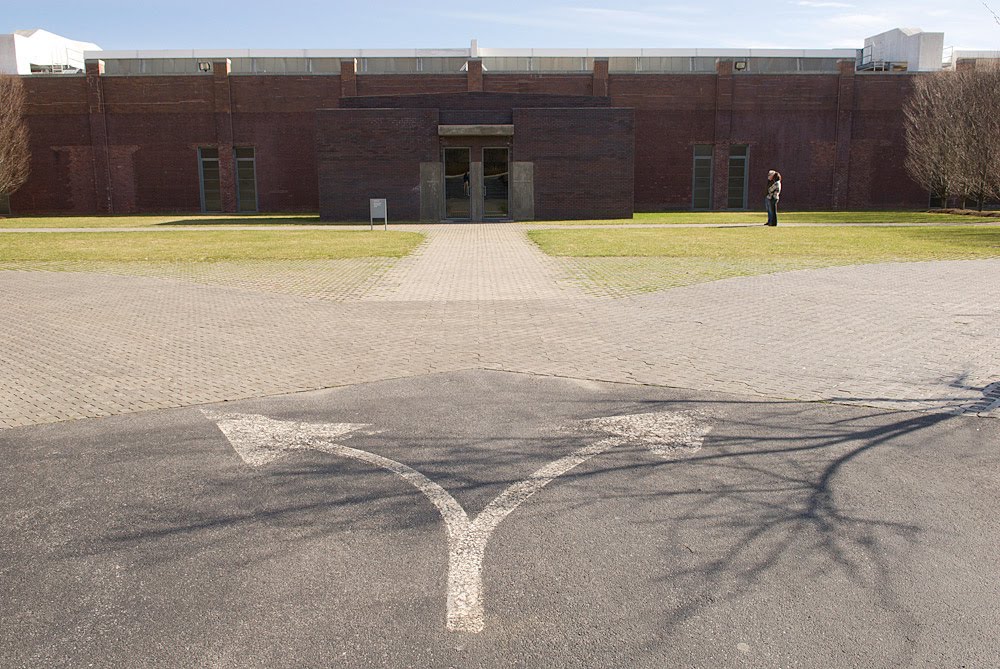

Whither Industrial America? No.2
Manufacturers search for cheaper labor. Many of the mills in New England closed as owners found cheaper labor in the southern states. Some of these operations shut down in favor of cheaper overseas labor.

Barbarians at the Gate: The Fall of RJR Nabisco
outlines the stock price manipulation and hostile takeover that led to the gutting of the company. John Ballo cites the these reasons for the closing of Nabsico's Beacon plant that put hundreds out of work.

The Alliance for the Arts, a New York City based organization, advances the arts by presenting the facts about the positive economic impact of the arts industry. The organization commissioned my friend Benjamin Swett to photograph and write The Hudson Valley: A Cultural Guide. His explorations up and down the Hudson River, 400 years after Henry Hudson, included a visit to Dia: Beacon.
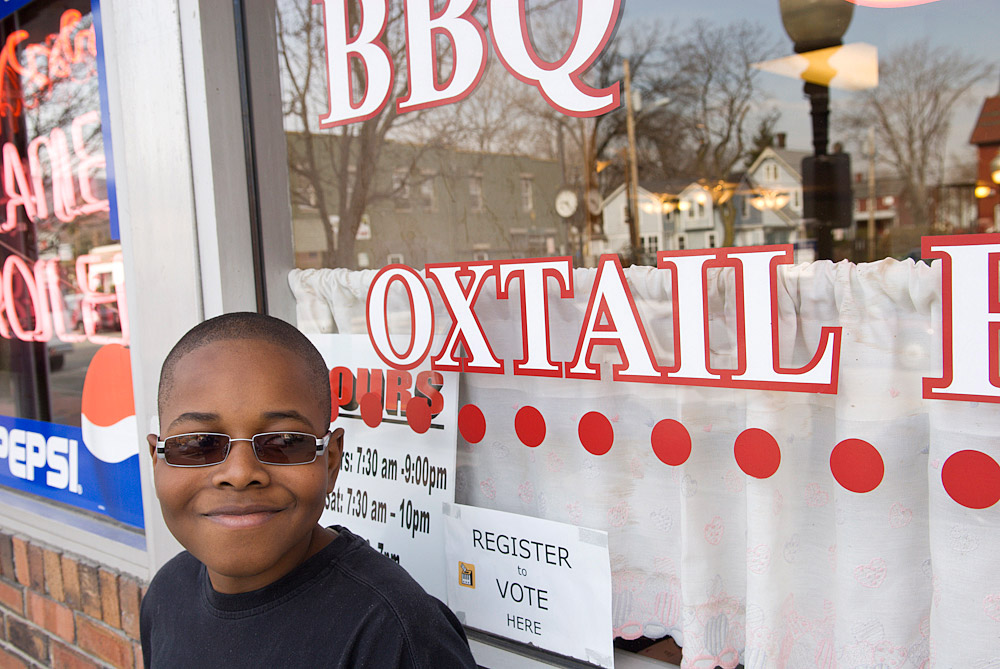

Portrait of a Young Artist
I met Kamron Husbands on Main Street in Beacon. He lives in town, considers himself an artist and regularly visits Dia: Beacon. Regarding the impact of the museum on the town, Mr. Husbands says: "The town is getting artistic. Dia brings hope to Beacon."

Yesterday I ran into a web developer who works for Gravity Switch. He told me about their new product the iBracket, which turns an iPad into wall mounted interactive screen, ideal for, well, museums and art galleries. It is manufactured in the US. 21 days from product conceptualization to first sale.

I have more information and photographs for this creative economy story. If you know of any possible venues for publication, please let me know. Thanks!

TechTalk: Nikon D200, 17-55mm, ISO range 100-400. Cafe, Boutique, Antiques and Main Street and Crossroads are in-camera multiple exposures treated with Topaz Adjust, a plug-in for Photoshop. ©2010 John Nordell

April 30, 2010

Destination Dia: Beacon - Part 2


Look | Sensory Inspiration


Last week in Part 1, I stopped in Winsted, CT on my way to visit the contemporary art museum Dia: Beacon in Beacon, NY. I noted how the creative economy fostered by the huge art complex housed in a former manufacturing facility contributed to Beacon's revival and cited artistic endeavors in Winsted, CT, a former mill town in need of economic revival. Several readers mentioned how the establishment of another art museum, MassMOCA, spurred renewal in North Adams, MA.


Walmart Lot
Taking a break from creating signs announcing the upcoming artist studios open house, Winsted artist Stacy Servant talked about the importance of local economies. "People are finally getting the message to buy locally. When you buy something from Walmart, you are supporting China."

Across the street my from hotel in Fishkill, NY, was a Walmart Supercenter, so I ventured in to buy some film.


How Much Longer?
A couple of weeks after this journey to Dia: Beacon, I attended a lecture at UMass Amherst by author, economic analyst and venture capitalist Eric Janszen. His clients were happy the he foretold the crash of 2008.


Economic Analysis
After the talk, I mentioned Ms. Servant's Walmart comment to Mr. Janszen and his facial expression conveyed disagreement. I then reeled off the list of all the items once manufactured in Winsted and asked, "What are we going to manufacture?"

"When I debate Pat Buchanan about making these things," he replied, "I ask him, 'How far back do you want to go?' We cannot go back and make these things." Janzen's upcoming book reportedly emphasizes the importance of biotechnology, alternative energy and nanotechnology.


Intertwined Supercenter
The intertwined international economy is no doubt complicated. As I wandered the gleaming Walmart aisles dotted with the ubiquitous mantra, Save Money. Live Better., I could not but help think of the empty storefronts in Winsted and the ghosts of the jobs that inhabit the empty mills.


Save Money. Live Better.
What you look at, affects what you see.


International Shopping
Exiting Walmart, I saw - or was it felt? - alienation.

TechTalk: Nikon D200, 17-55mm, ISO range 100-1000. Intertwined Supercenter is an in-camera multiple exposure treated with Topaz Adjust, a plug-in for Photoshop CS4. ©2010 John Nordell

April 22, 2010

Destination Dia: Beacon - Part 1


Enjoy | Delight in Life

I set off with Dia:Beacon as my destination. Dia:Beacon is a huge contemporary art museum housed in a former Nabisco cookie box printing plant in Beacon, NY. The institution has anchored the economic rebound of the once thriving industrial town. On my way, I stopped in Winsted, CT for a snack. I noted many empty mill buildings, signs of former manufacturing activity. Learning that an artist had plans for massive 3D mural in Winsted depicting US industrial history, I wondered how an arts centered creative economy could impact Winsted.

Pins, clocks, socks, blenders, toasters, scythes, silk, wire, coffin hardware, ribbon candy, hoes and more, were all manufactured in Winsted.


Once Water Powered


Winsted, CT

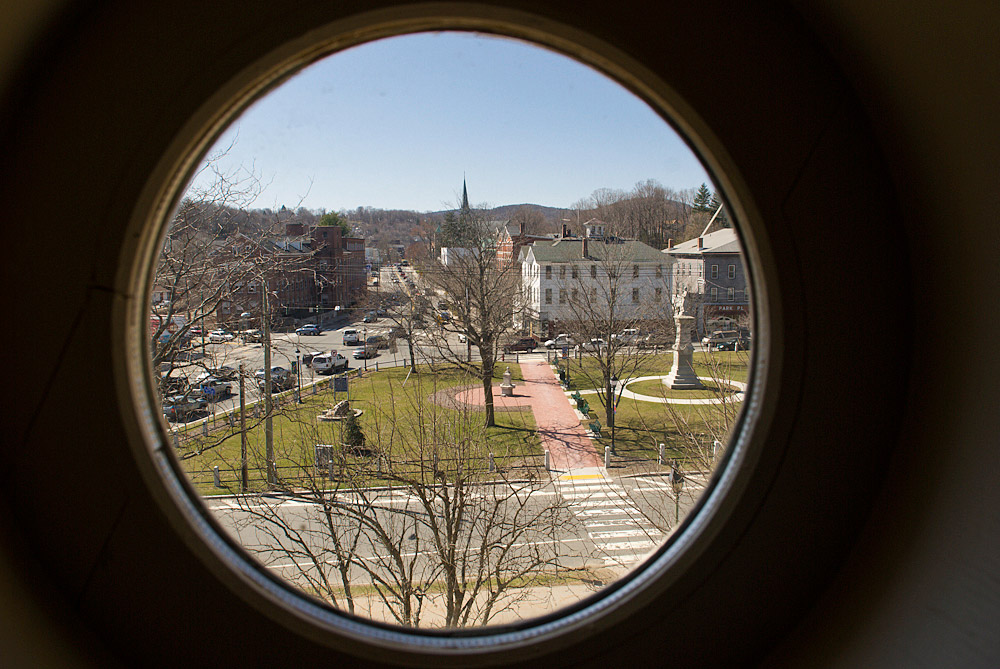
Bob Moore's real estate office is on Main Street. His business is going strong as Connecticut and New York families tied to the sports schedules of their children eschew weekend/vacation homes on distant Cape Cod and instead buy properties situated on the area's lakes. However, as far as the town: "It is dying for a developer to come through and resurrect the dead."


Real Estate Agent

Behind Mr. Moore is a factory building owned by Ralph Nader, where the consumer advocate plans to establish The American Museum of Tort Law. The institution may draw visitors to Winsted, Mr. Nader's home town.

 Sock Factory

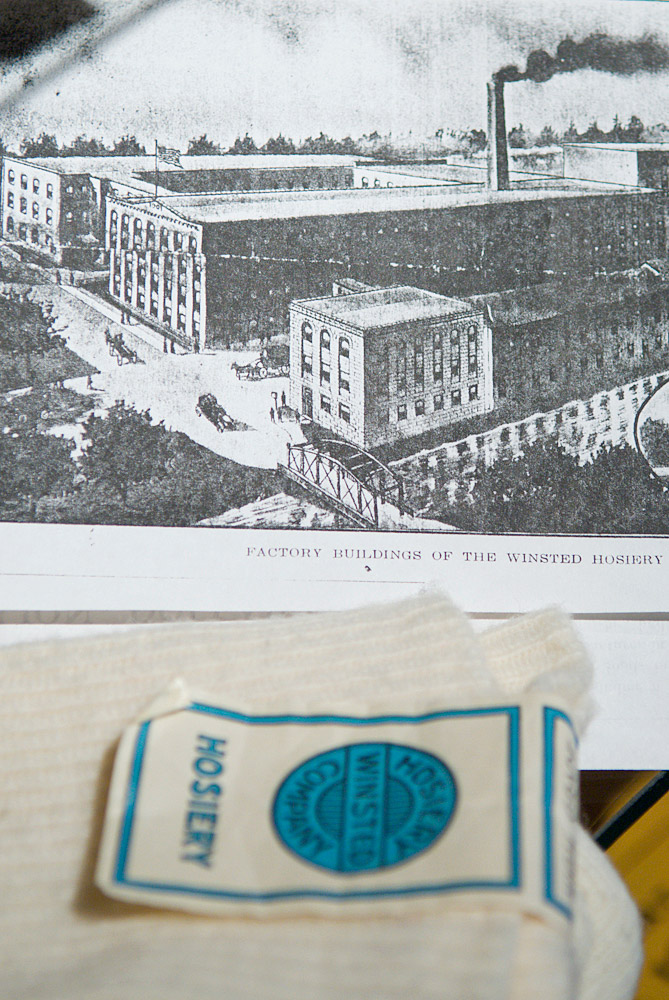
Milly Hudek runs The Historical Society in Winsted like a tight ship. These socks on display were made at the Winsted Hosiery Company, the smokestacked mill in the photograph.

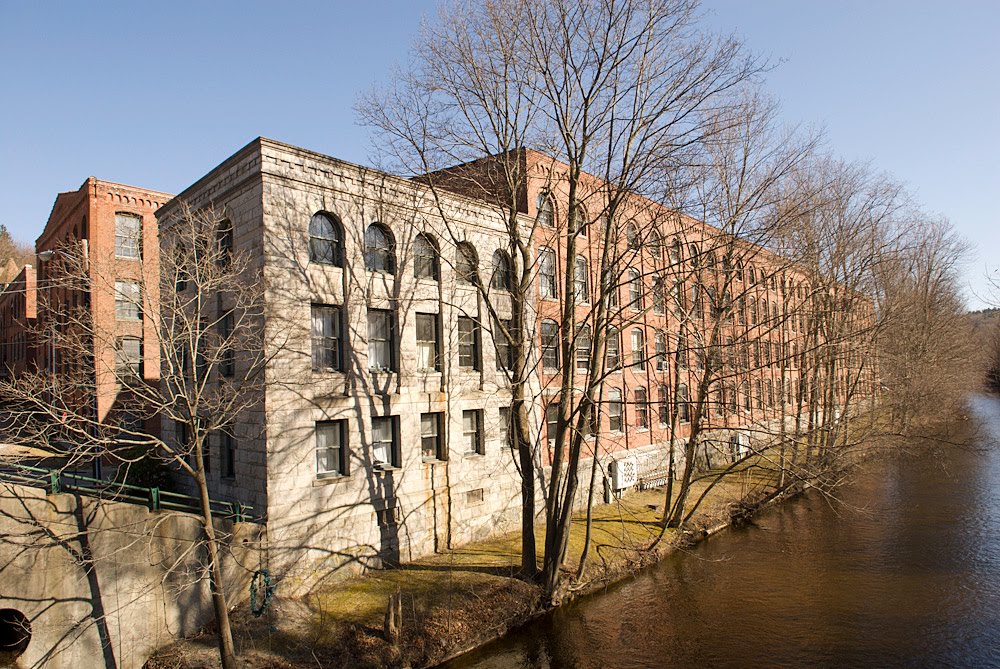
The building exteriors look much the same then as now.


Once Factories, Now Artist Studios and Apartments

Inside is a different story. Though a lingering smell of machine oil evokes industrial days, the former site of the Winsted Hosiery Company houses artist studios and small businesses.


Artist

Visual artist, painter and teacher Gay Schempp notes the "odd smells, fabulous light and cheap rent. The pros outweigh the cons." She is a member of The Artists @ Whiting Mills. From the group's mission statement: "Our goal is to give members' work exposure and to enrich our community with our combined talents and skills."


Repurposing

The building comes alive when the artists hold their open studios. The community college in town is expanding. Yet more needs to be done to fill the remaining mills and vacant Main Street store fronts with economic activity.

© 2010 John Nordell

February 11, 2009

Sol LeWitt Redux


At the LeWitt exhibition at MassMoCA, I devoured a 10 minute film that chronicled the process of artists creating the three floors of wall drawings. One close-up showed an artist making endless, careful pencil squiggles.


So the next morning, eschewing scraping the frost off my car in an orderly manner, I made squiggles. As the rear window defrosting lines heated, my own ephemeral car LeWitt emerged.

Later, I climbed a pile of snow to show Main Street in North Adams. In the name of urban renewal, the whole left side of the street was leveled in the late 1960s. But industry kept leaving town.


MassMoCA's opening in 1999 has anchored a burgeoning creative economy, putting the town back on the map. Taking the color out of the image takes me back in time.